Digital Products Available Globally | Physical Products currently Shipping to USA, Canada, UK, EU, AU & NZ. ✨ Introductory SALE across all products!

7 Proven Sibling Storytime Strategies for Every Modern Parent
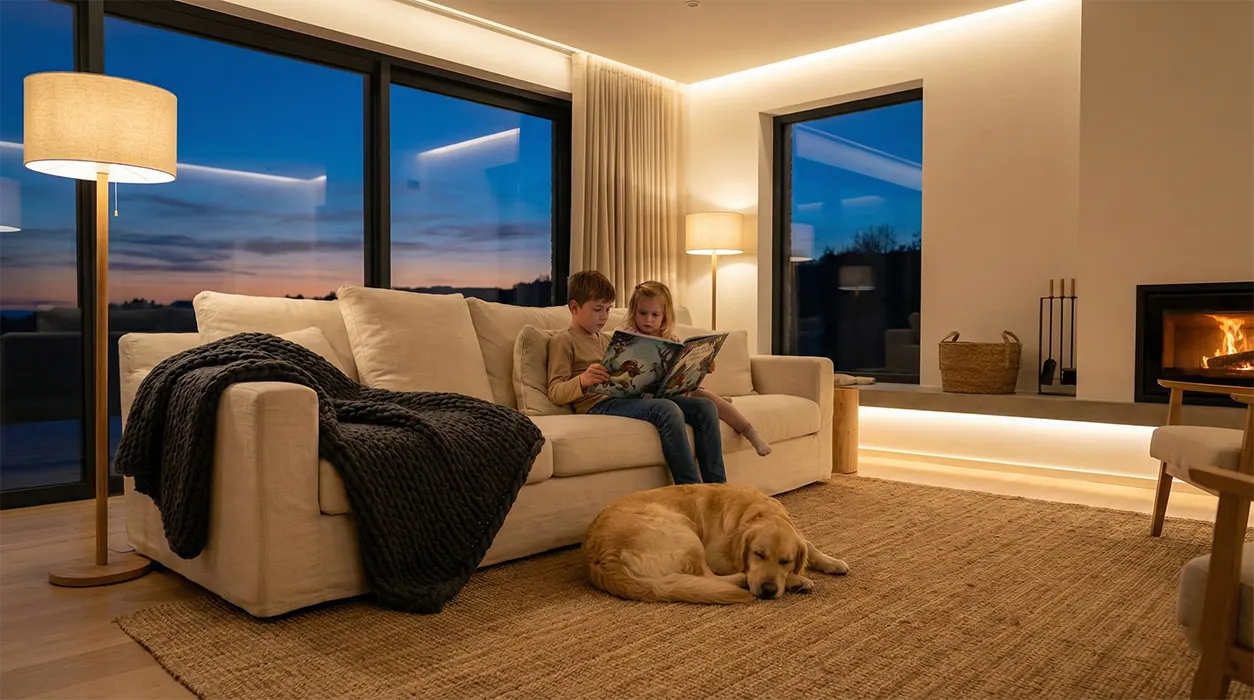
The sun begins to set over the horizon, casting long, amber shadows across the living room floor. In many households, this is the exact hour when the evening peace gives way to the chaotic reality of the bedtime routine. If you are a parent navigating a significant age gap between your children, you know the specific brand of exhaustion that comes with this territory.
You might have an older child who is nearing ten and craving narrative complexity, alongside a toddler who remains entirely enchanted by the simplest of visual wonders. Trying to find a single narrative thread that binds these two vastly different worlds together is the ultimate parenting challenge. This is precisely where the concept of a unified sibling storytime becomes your most powerful tool for family harmony.
Quick Guide: Sibling Storytime
Mastering a shared reading routine with a significant age gap requires strategic layering. Utilize the Anchor Book method to find stories offering both visual magic and narrative depth. Establish staggered reading rhythms, introduce quiet tactile toys for restless toddlers, and empower older children as guest narrators to foster lasting family connection.
Table of Contents

For many of us, the evening read is the only time the house truly slows down. It is a sacred window of time where we can foster deep emotional connections before sleep. However, when a five-year or larger gap exists between your listeners, that peaceful vision often turns into a juggling act of competing demands. The older child rolls their eyes at board books, while the younger one violently turns the pages of a chapter book they cannot comprehend.
The frustration mounts, the exhaustion deepens, and the magic of the evening is entirely lost. The key to ending this daily tug-of-war is not to separate them into different rooms. Instead, we must fundamentally rethink how we approach our shared sibling storytime altogether.
When we intentionally design an inclusive reading environment, we do more than just get them to sleep. We actively nurture their bonds, model empathy, and build a lasting foundation for an analog childhood. Mastering the art of a shared sibling storytime requires strategy, patience, and a willingness to abandon the traditional rules of reading aloud.
By implementing thoughtful, layered approaches, we can transform the chaotic bedtime battle into the most anticipated part of the day. A well-executed evening routine becomes a daily anchor of calm in an otherwise frantic world.
Strategy 1: The “Anchor Book” Method for a Harmonious Sibling Storytime
The foundation of a peaceful evening lies in selecting the right materials. This is where the “Anchor Book” method fundamentally changes the dynamic of your shared sibling storytime. An anchor book is a carefully chosen piece of literature that possesses layered appeal, offering something highly valuable to multiple cognitive levels simultaneously.
It is the literary bridge that connects the toddler’s deep need for visual stimulation with the older child’s need for conceptual depth. Finding these rare gems is an art form in itself, but it completely revolutionizes the bedtime routine. When you introduce a true anchor book to your evening sibling storytime, you immediately level the playing field.
The toddler is mesmerized by the sweeping illustrations, the vibrant colors, and the rhythmic cadence of the words. Simultaneously, the older child is genuinely engaged by the subtle humor, the hidden moral complexities, or the sophisticated vocabulary seamlessly woven into the text. This dual-layered engagement ensures that neither child feels neglected or bored during your sibling storytime.
It allows you to sit in one cozy place, holding one beautifully bound book, while captivating two vastly different minds without ever breaking the narrative flow. To successfully implement this strategy, you must look beyond standard age recommendations. You are actively searching for universally resonant themes like friendship, nature, or overcoming adversity.
Books with highly detailed, immersive artwork are particularly effective for this purpose. They give the younger child a visual playground to explore while you read the longer text aloud to the older sibling. If you are intentional about your selections, you will quickly discover that the evening ritual fosters a profound sense of shared discovery.
Here are the core elements to look for when selecting an anchor book to elevate your sibling storytime:
- Lush, Expansive Illustrations: The artwork must be detailed enough to hold a toddler’s attention for several minutes per page without needing the words.
- Sophisticated Vocabulary: The text should not talk down to the reader; it should introduce new, challenging words that gently stimulate the older child’s intellect.
- Rhythmic but Complex Prose: A poetic cadence instantly soothes the younger child, while the intricate sentence structure thoroughly engages the older listener.
- Universal Emotional Truths: Themes that resonate deeply with the human experience, allowing both ages to draw their own unique conclusions from the narrative.
- Interactive Visual Details: Hidden elements within the illustrations that the older child can gently point out to the younger one, encouraging quiet collaboration.
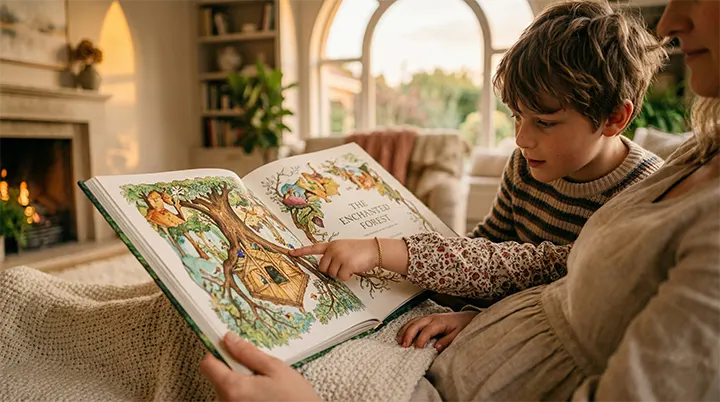
Building a robust library of these anchor books takes time, but it is a vital investment in your family’s evening peace. As you carefully curate this collection, you will find that the daily friction of choosing a book naturally dissolves. The shared reading experience quickly becomes a moment of unified anticipation rather than a frustrating negotiation of compromises.
Strategy 2: Establishing Staggered Rhythms for Sibling Storytime Success
Even with the absolute perfect anchor book in hand, attention spans will inevitably vary. A toddler simply cannot sit still for the duration of a complex chapter book, and expecting them to do so is a guaranteed recipe for frustration. To counteract this biological reality, we must strategically introduce the concept of staggered rhythms into our routines.
This powerful strategy involves structuring the reading session in deliberate waves. You purposefully cater to the shortest attention span first and gradually shift the focus as the evening progresses toward deeper rest. A staggered sibling storytime always begins with high visual engagement and minimal text.
You start the session by focusing primarily on the younger child. Choose a highly interactive or visually stimulating book straight from your beautifully styled forward-facing bookshelf. During this initial phase, the older child is present but acting as a passive, relaxed participant.
They are perhaps simply unwinding from the school day or enjoying the physical closeness of the shared, cozy space. This ensures the toddler gets their dedicated, intensive focus right when their energy begins to rapidly wane. Meeting this need first prevents the classic meltdowns caused by extreme over-tiredness.
Once the toddler’s immediate need for engagement is fully met, they often begin to naturally drift. They might start playing quietly with a soft analog toy, leaning heavily against your shoulder, or simply resting their heavy head. This subtle shift is the precise moment the rhythm of your sibling storytime changes.
You seamlessly transition to a longer, more narrative-heavy book aimed directly at the older child. The toddler is still safely enveloped in the soothing cadence of your voice, which acts as a gentle lullaby. Meanwhile, the older child finally receives the deep intellectual stimulation they actively crave during a successful sibling storytime.
To effectively execute a staggered rhythm, follow these highly intentional pacing steps:
- The Visual Anchor Initiation: Begin the session with a board book or a highly illustrated picture book. Direct your questions and eye contact primarily to the younger child to fulfill their immediate need for connection.
- The Soft Narrative Transition: As the younger child’s attention naturally begins to wane, gently introduce a transitional book. This is often an anchor book with moderate text that beautifully bridges the developmental gap.
- The Deep Narrative Dive: Once the toddler is physically relaxed or engaged in quiet, tactile play, bring out the advanced chapter book. This story is designed specifically to capture the imagination of the older child.
- The Ambient Voice Lullaby: Continue reading the advanced text in a highly calm, steady voice. The complex words themselves become a soothing background soundscape that helps the younger child drift toward restorative sleep.
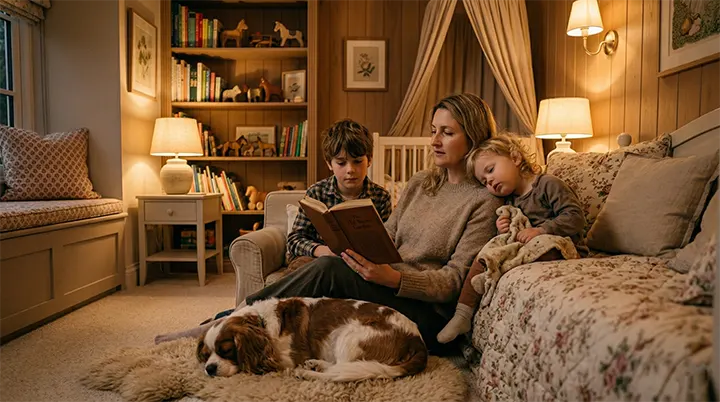
This staggered approach entirely removes the immense pressure for simultaneous, equal engagement. It beautifully acknowledges the biological reality of different developmental stages while still preserving the vital physical intimacy of the shared sibling storytime. It teaches the older child valuable patience, as they learn to quietly wait for their dedicated narrative.
Concurrently, it teaches the younger child to find profound comfort in the ambient sound of reading aloud. By completely abandoning the rigid expectation that both children must be equally focused on the exact same page at the exact same time, you liberate the entire evening routine. Your shared sibling storytime evolves from a rigid, stressful performance into a highly fluid, responsive environment. This adaptability is the absolute hallmark of a mindful, intentional approach to raising children in a beautifully complex world. As you master this rhythm, you are actively limiting screen time and replacing it with pure, uninterrupted family connection.
Strategy 3: Empowering the “Guest Narrator” in Your Sibling Storytime
The dynamic of your shared evening reading does not always have to rely entirely on your own exhausted voice. As your oldest child rapidly grows, their developing literacy skills present a truly beautiful opportunity to completely shift the traditional bedtime dynamic. Strategy three involves intentionally stepping back and introducing the “Guest Narrator” role into your nightly routine.
This is a highly transformative approach to your sibling storytime that actively empowers the older child while deeply captivating the younger one. By inviting your older child to take the stage and read a selected picture book to their younger sibling, you immediately change the energy of the entire room. You transition from being the sole entertainer to becoming a quiet, supportive audience member alongside your toddler.
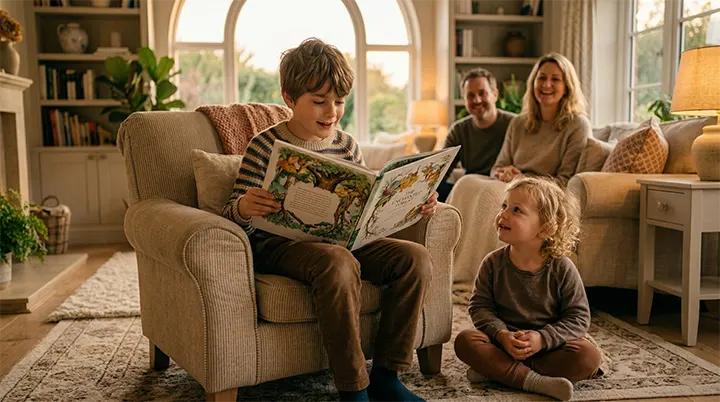
This intentional shift completely removes the heavy burden of performance from your shoulders. It allows you to physically rest, observe, and silently foster the precious bond growing between your children during your sibling storytime. The benefits of this collaborative method extend far beyond simply giving your vocal cords a much-needed break.
When an older child reads aloud to a younger audience, they are actively practicing fluency, exploring emotional inflection, and building immense self-confidence. According to early learning research from the U.S. Department of Education, practicing reading aloud in a safe, deeply supportive environment is crucial for advanced cognitive development and long-term reading comprehension.
Furthermore, the younger child is absolutely mesmerized by the novelty of their older sibling taking charge. They view their big brother or sister as an ultimate authority figure, which makes the narrative feel incredibly special and highly engaging. This shared interaction becomes the absolute highlight of their daily sibling storytime.
To successfully implement the guest narrator strategy, you must set the older child up for complete success. Do not ask them to sight-read a highly complex or unfamiliar book right before bed when their mental energy is heavily depleted. Instead, allow them to pre-select a beloved, deeply familiar picture book from their own early childhood.
They will take immense pride in sharing a cherished, nostalgic story with their younger sibling. By making this a predictable weekly event, your sibling storytime becomes a powerful vehicle for mutual respect and shared family history.
Strategy 4: Tactile Engagement and Analog Props for a Peaceful Sibling Storytime
One of the greatest hurdles in managing a significant age gap is the sheer kinetic energy of a growing toddler. Expecting a highly active two or three-year-old to sit perfectly motionless while you read a sprawling, text-heavy chapter book to your nine-year-old is an exercise in utter futility. Their developing bodies simply demand constant, tactile feedback from their immediate environment.
To beautifully counteract this restlessness, we must deliberately introduce quiet, tactile engagement into our shared sibling storytime. Strategy four involves curating a specific basket of analog props designed exclusively for the evening reading session. These are not loud, flashing, or highly stimulating plastic toys that will disrupt the peaceful atmosphere.
Instead, they are deeply grounding, beautifully crafted items that keep little hands pleasantly busy while their auditory processing remains fully engaged with your voice. By satisfying their profound physical need to touch and explore, you successfully prevent the behavioral meltdowns that routinely threaten to ruin a peaceful sibling storytime.
This mindful approach beautifully reinforces the principles of an essential analog childhood, proving that children do not need digital screens to remain quietly entertained. Providing a curated sensory experience allows the older child to listen to their complex chapter book without constant, frustrating interruptions from a restless younger sibling.
Consider curating a dedicated “quiet basket” containing the following tactile props for your next sibling storytime:
- Open-Ended Wooden Blocks: Smooth, natural wooden shapes that can be quietly stacked and restacked on a soft rug without making sharp noises.
- Textured Sensory Silks: Large, flowing play silks that a toddler can drape over themselves, fold, or gently bunch up while listening to the narrative flow.
- Lacing Cards or Threading Toys: Simple, repetitive fine-motor activities that require just enough visual focus to quiet the mind without entirely blocking out the spoken story.
- A Dedicated “Story Blanket”: A heavily weighted or deeply textured blanket reserved exclusively for this time of day, acting as a physical cue that it is time to settle down.
- Soft, Unstructured Plush Companions: Simple stuffed animals without internal hard plastic parts, allowing the toddler to tightly squeeze or cuddle them for deep pressure regulation.

When you thoughtfully introduce these analog props, the entire atmosphere of your sibling storytime shifts from a restrictive discipline exercise into a cozy, liberating sensory experience. The toddler is happily anchored to the physical space by their quiet play, absorbing the rich vocabulary of the older child’s book almost through osmosis.
Simultaneously, the older child receives the uninterrupted, highly complex narrative depth they desperately crave. This beautiful compromise is the absolute essence of a successful, multi-age sibling storytime.
Strategy 5: The Format Sandwich for a Predictable Sibling Storytime
Children of all ages profoundly crave predictability, especially during the highly sensitive transition between the chaotic waking world and restorative nighttime sleep. When managing a significant age gap, creating a reliable structure that equally serves both children is absolutely paramount. Strategy five introduces the highly effective “Format Sandwich” method to beautifully structure your nightly sibling storytime.
This simple but incredibly powerful technique involves layering different literary formats in a specific, unwavering sequence. It guarantees that both the toddler’s need for visual stimulation and the older child’s need for narrative depth are consistently met in a predictable rhythm. The concept is elegantly straightforward: you begin with a highly visual picture book, transition smoothly into a longer chapter book, and then conclude with a final, deeply soothing picture book.
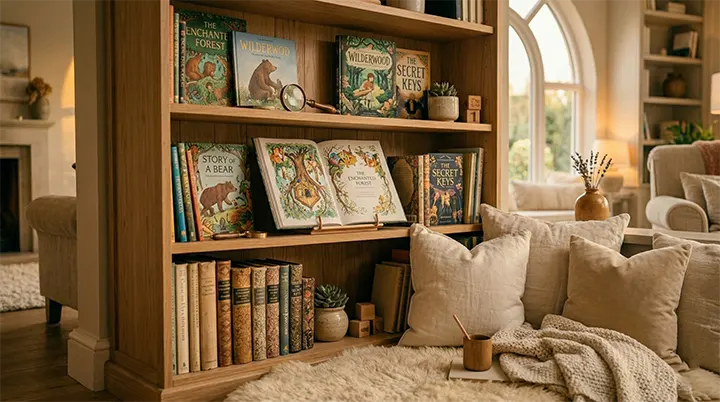
By utilizing this specific sandwich structure, you are effectively framing the complex, text-heavy core of your sibling storytime with highly accessible, visually stunning bookends. The initial picture book acts as the vital welcoming hook. It immediately draws the restless toddler into the physical space, capturing their wandering attention with vibrant colors and engaging, simple text.
Once the toddler is physically settled and feeling deeply connected, you seamlessly transition to the “meat” of the sandwich: the complex chapter book dedicated to the older sibling. Because the toddler has already received their dedicated visual engagement, they are far more likely to quietly tolerate the longer, text-heavy reading period. They may even drift off to sleep while playing with their tactile props.
However, if the toddler is still awake after the chapter book segment concludes, the final picture book serves as the ultimate, deeply comforting closure to your sibling storytime. This predictable routine acts as a gentle digital detox, slowly lowering the entire household’s cortisol levels through a highly reliable analog sequence.
The profound beauty of the format sandwich is that it entirely eliminates the nightly bickering over whose turn it is to choose the book. Both children implicitly understand that their specific literary needs will be fully met during every single sibling storytime.
This unwavering consistency builds a deep sense of trust and security, which is the exact emotional foundation required for a peaceful, tear-free bedtime. By committing to this beautifully structured format, you elevate your evening routine from a chaotic daily chore into a highly cherished, lifelong family tradition.
Strategy 6: Elevating the Evening with Screen-Free Audio Soundscapes
While your own voice is the primary instrument of a shared sibling storytime, introducing ambient audio can profoundly elevate the entire experience. We are absolutely not talking about tablets, televisions, or any form of digital screens that emit blue light and heavily disrupt melatonin production. Instead, we are focusing on pure, screen-free audio soundscapes that beautifully enhance the narrative atmosphere without ever overstimulating the brain.
When you seamlessly incorporate gentle background sounds—like a crackling fireplace during a winter tale, or soft ocean waves during an island adventure—you create a deeply immersive environment. This auditory layer is a brilliant tactic for a sibling storytime because it appeals universally across the entire age gap. The toddler is instantly calmed by the rhythmic, white-noise quality of the soundscape, naturally helping them transition into a state of physical rest.
Meanwhile, the older child uses those exact same audio cues to aggressively fuel their active imagination, painting a far more vivid mental picture of the complex narrative. To execute this beautifully during your sibling storytime, simply utilize a basic, screen-free Bluetooth speaker hidden entirely out of sight.
Consider these highly effective auditory elements to enhance your next reading session:
- Nature Soundscapes: Rainstorms, wind rustling in the trees, or gentle streams to perfectly accompany outdoor adventures.
- Classical Instrumentals: Soft, slow cello or piano music that directly mirrors the emotional tone of the picture book.
- Thematic Ambiance: The subtle sounds of a bustling medieval market or a quiet library to match the setting of an older child’s chapter book.
- White Noise Transitions: Slowly fading the thematic sounds into pure white noise as the sibling storytime concludes and deep sleep begins.
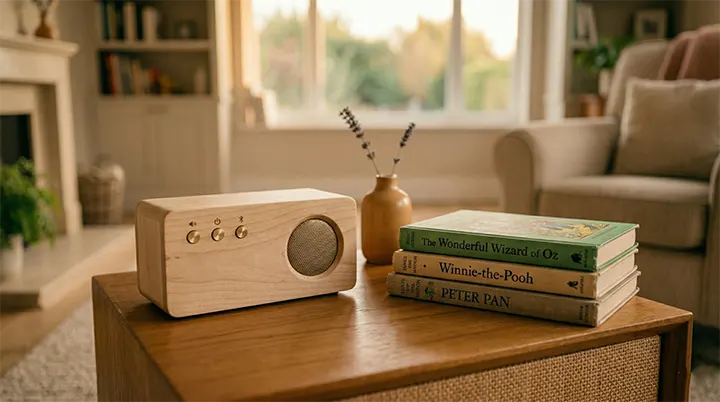
By masterfully layering these auditory elements, your sibling storytime becomes a truly multi-sensory experience. It perfectly complements your intentional efforts to create low stimulation activities for after school resets, ensuring the evening remains a highly protected decompression zone for the entire family.
Strategy 7: Transforming the Routine into a Family Book Club
As your children rapidly grow and their cognitive capacities naturally expand, your shared reading ritual must also intentionally evolve. Strategy seven involves elevating the traditional read-aloud format into an interactive, highly age-differentiated discussion. By carefully transforming your nightly sibling storytime into an informal family book club, you stimulate deep critical thinking in your older child while gently introducing foundational comprehension skills to your toddler.
The ultimate secret to a successful book club dynamic during a sibling storytime is differentiated questioning. You simply cannot ask a three-year-old and an eight-year-old the exact same questions and expect a harmonious result. Instead, you must intentionally tailor your conversational prompts to uniquely fit their distinct developmental stages. After finishing a chapter or a visually stunning picture book, pause to invite quiet reflection.
For the toddler, focus entirely on visual observation and basic recall. Ask them to eagerly point to specific colors, playfully name the animals they just saw, or simply identify the primary emotion of the main character. This keeps them highly engaged in the sibling storytime without ever overwhelming their developing processing skills.

For the older child, confidently skip the basic recall and move straight into critical analysis and active empathy-building. Ask them why they think a specific character made a difficult choice, or how they personally would have handled a similar, complex conflict.
This dual-questioning method provides immense psychological value. Here are a few proven ways to successfully structure these discussions during your sibling storytime:
- The Observational Prompt (Younger Child): “Can you find the tiny gray mouse hiding quietly on this page?” or “Is the big brown bear feeling happy or sad right now?”
- The Empathy Prompt (Older Child): “Why do you think the main character ultimately decided to share their treasure instead of keeping it all a secret?”
- The Predictive Prompt (Both Ages): “What do you think is going to happen when we slowly turn the page?” (Allowing the toddler to guess wildly while the older child uses subtle context clues).
- The Real-World Connection (Older Child): “Does this frustrating situation remind you of anything difficult that happened at school today?”
This intentional, guided dialogue transforms a passive listening activity into a highly active mental exercise. It proves that a unified sibling storytime is not just about rapidly getting through a book; it is about carefully teaching children how to interact with literature and with each other. This practice very often sparks brilliant ideas for screen-free weekend activities, as the rich themes discussed at night seamlessly bleed into their imaginative, independent play the very next day.
Conclusion: Building a Lifelong Analog Tradition
Navigating the daily complexities of parenting children with a significant age gap is a journey requiring immense patience, creativity, and abundant grace. It is perfectly normal to occasionally feel overwhelmed by their aggressively competing needs, especially at the absolute end of a long, exhausting day. However, by fully embracing these seven proven strategies, you can completely dismantle the highly stressful bedtime battle once and for all.
You have the remarkable power to transform a chaotic evening chore into a beautifully synchronized sibling storytime. Remember that rigid perfection is never the actual goal here. There will inevitably still be nights when the toddler is utterly restless, or the older child is highly frustrated by a minor distraction.
The true objective of a shared sibling storytime is not to strictly enforce rigid silence, but to intentionally foster an environment of shared warmth and collective imagination. It is about creating a highly predictable, analog anchor in their daily routine that strongly signals physical safety and deep emotional connection.
As you consistently implement the anchor book method, intelligently stagger your reading rhythms, and introduce tactile engagement, you will witness a profound shift in your household dynamic. The evening reading session will quickly become a time of deep, restorative calm. Interestingly, this tranquil energy often extends far beyond just the children.
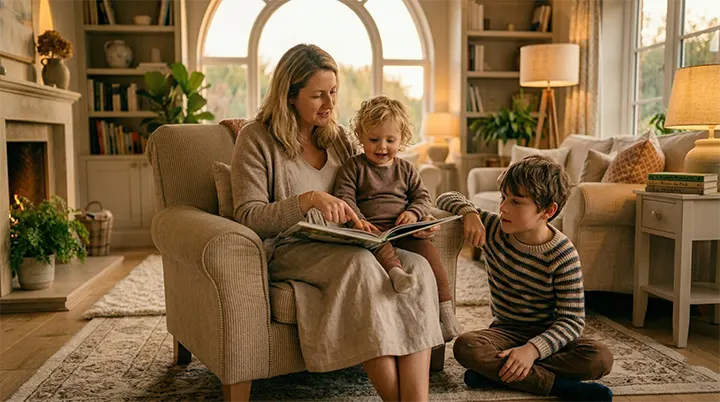
Just as modern families carefully research 15 low-maintenance dog breeds for a calm home to maintain daily peace, cultivating a highly reliable sibling storytime naturally lowers the cortisol levels of the entire family, beloved pets included.
Ultimately, the immense effort you invest in a unified sibling storytime yields lifelong psychological dividends. You are not just simply teaching them how to read; you are actively teaching them how to truly listen to one another, how to softly share physical space peacefully, and how to find genuine magic in the printed word.
You are gifting them the beautiful, enduring foundation of an analog childhood. So, tonight, take a long, deep breath, gather them close on the sofa, and let the transformative power of a shared sibling storytime gracefully begin.