Digital Products Available Globally | Physical Products currently Shipping to USA, Canada, UK, EU, AU & NZ. ✨ Introductory SALE across all products!


50 Screen-Free Weekend Activities to Spark Creative Joy in Your Kids
We all know that familiar Friday afternoon feeling. The work week is finally over, but the marathon of parenting is just beginning. You want nothing more than to sip a hot coffee in total silence. Instead, you are met with endless requests for snacks and entertainment.
This is precisely when the digital temptation is the strongest. Handing over a tablet is the fastest way to buy yourself a momentary sanctuary of peace. But deep down, you know that finding engaging screen-free weekend activities is vital for your child’s developing mind.
Table of Contents
We tell ourselves it is just for thirty minutes. Then, thirty minutes stretches into a full two-hour digital deep dive. By the time we ask them to turn it off, we are met with massive emotional meltdowns.
The truth is, curating a list of screen-free weekend activities does not mean you have to entertain your child constantly. In fact, it is the exact opposite. True analog play is about setting the stage for independent, creative focus.
When we remove the constant dopamine hits of digital games, children are forced to rely on their own imaginations. As we discussed in our guide to limiting screen time for a digital detox, protecting their cognitive bandwidth is the ultimate gift. Replacing that digital reliance with enriching screen-free weekend activities builds lasting mental endurance.
The Weekend Screen Trap: Why We Default to the Tablet
There is absolutely no shame in admitting that modern parenting is exhausting. We are juggling careers, household management, and the heavy emotional weight of raising good human beings. It is completely natural to default to the easiest available solution when our energy reserves are depleted, rather than facilitating screen-free weekend activities.
However, relying heavily on digital entertainment creates a vicious cycle in the home. The more screen time a child consumes, the less capable they become of entertaining themselves. Their tolerance for a slow, analog pace drops significantly over time, making any future screen-free weekend activities feel like a chore rather than a joy.
Research from early childhood development centers, such as the Center on the Developing Child at Harvard University, consistently shows that unstructured play is essential. It builds resilience, problem-solving skills, and vital emotional regulation. Introducing consistent screen-free weekend activities gently guides them back to this natural state of play.
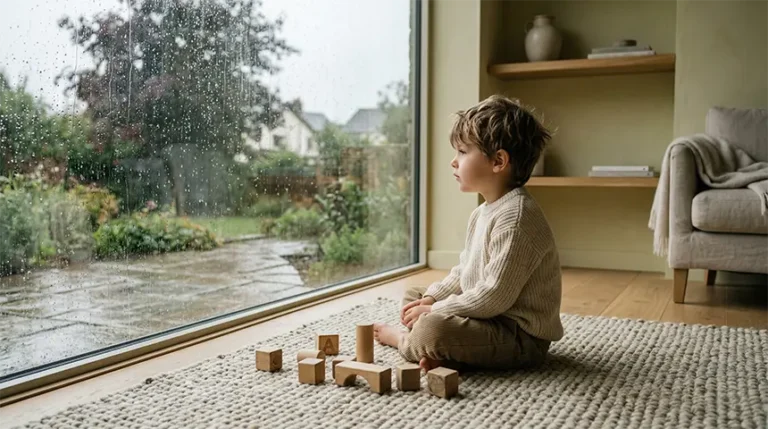
That is why transitioning to screen-free weekend activities requires a slight perspective shift from the caregiver. We have to view boredom not as a problem to be solved, but as a blank canvas.
When a child complains that they are bored, they are actually standing on the precipice of deep creativity. If we rush to fill that void with a glowing screen, we steal that developmental opportunity from them. Committing to screen-free weekend activities means allowing them to experience that boredom safely.
Implementing reliable screen-free weekend activities is about guiding them through that initial discomfort of boredom. Once they push past the whining stage, the true magic of an analog childhood begins to flourish.
The Secret Weapon: Setting Up a Physical “Boredom Buster” Station
The biggest hurdle to a tech-free weekend is the mental load of coming up with ideas on the spot. If you have to scour the internet for inspiration while your child is already whining, you have already lost the battle. The secret to success with your screen-free weekend activities lies in proactive environmental design.
You need to build a dedicated, easily accessible “Boredom Buster” station in your home. This is a designated physical space loaded with low-mess, high-engagement materials. When the complaints start, you simply direct them to the station without a word to instantly initiate their screen-free weekend activities.
This strategy completely removes you from the role of the constant entertainer. It empowers the child to make their own choices and take ownership of their playtime. Cultivating independent play is a skill that must be practiced regularly to stick.
Your station does not need to be an elaborate, Pinterest-perfect aesthetic masterpiece. A simple rolling cart, a repurposed bookshelf, or a dedicated lower cabinet works beautifully. The key is to keep it stocked, organized, and exclusively reserved for independent exploration during your screen-free weekend activities.
By having these materials ready to go, you are creating a “yes space” where they do not need your permission to start creating. This simple shift in accessibility makes executing screen-free weekend activities completely effortless for exhausted parents.
Here are five essential categories to stock in your Boredom Buster station to guarantee success for all your screen-free weekend activities:
- Open-Ended Art Supplies: Stock up on washable markers, watercolor palettes, blank sketchbooks, and endless stacks of plain white paper. Avoid overly prescriptive coloring books that stifle raw creativity.
- Tactile Building Materials: Keep a heavy rotation of magnetic tiles, classic wooden blocks, and interlocking bricks. These are the foundation of spatial reasoning and architectural imagination.
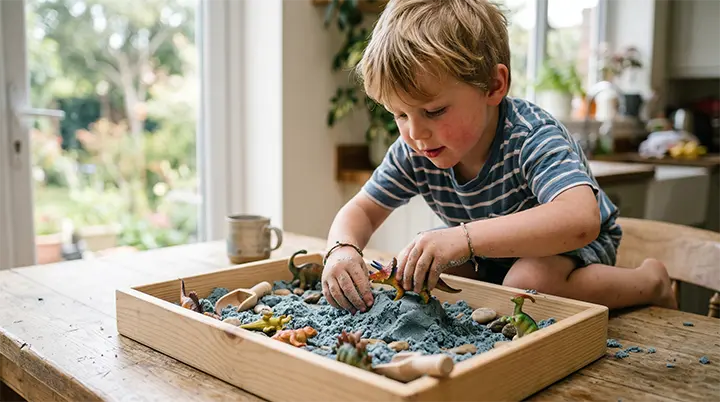
- Sensory Doughs and Tools: Fresh playdough, kinetic sand, and a small bin of safe kitchen utensils provide deep, calming sensory input. Rolling pins and blunt butter knives are perfect additions.
- Analog Audio Inputs: A screen-free audio player or a simple CD player with audiobooks allows them to engage with stories. This keeps their minds active while their hands are busy building.
- Recycled Loose Parts: Save clean cardboard tubes, egg cartons, and shoeboxes from your weekly deliveries. To a child’s mind, these are rocket ships, castles, and robot armor waiting to be assembled.
Activities 1-10: Messy, Beautiful Sensory & Tactile Play
Now that your environment is primed for success, it is time to fill your weekend itinerary with engaging screen-free weekend activities. We will start with tactile play, which is absolutely crucial for early cognitive development. These screen-free weekend activities ground children in their physical bodies and calm their nervous systems.
Yes, sensory play can sometimes be a bit messy for the pristine home. However, the deep focus it provides is well worth the five minutes of cleanup required afterward. It is a highly effective way to bridge the gap between high-energy chaos and focused quiet time.
When planning your screen-free weekend activities, always keep a few sensory ideas in your back pocket. They are the perfect antidote to rainy afternoons or moments when siblings are relentlessly bickering over toys.
- The Classic Mud Kitchen: Designate an old corner of the yard and provide some thrifted metal bowls. Let them brew beautiful “potions” using dirt, water, and fallen leaves.
- Indoor Cloud Dough: Mix basic flour and baby oil to create a silky, moldable sensory material. Keep it contained in a large, shallow plastic bin on top of an old towel for easy sweeping.
- Ice Block Excavation: Freeze small plastic dinosaurs or durable toys in a large block of ice overnight. Hand them a spray bottle of warm water and a wooden mallet to play paleontologist.
- Shaving Cream Car Wash: Fill a baking sheet with basic foaming shaving cream and let them drive their plastic toy cars through it. Provide a separate bowl of warm water for the “rinse cycle.”
- Sensory Rice Bins: Dye cheap white rice with food coloring and a splash of vinegar, then let it dry. Pour it into a tub with scoops, funnels, and small hidden treasures.
- Homemade Slime Laboratory: Supervise a simple chemistry experiment using school glue and liquid starch. Kneading the slime provides excellent heavy work for their developing hand muscles.
- Water Bead Sorting: Hydrate a small batch of colorful, non-toxic water beads. Give them child-safe tweezers and ask them to sort the beads by color into different silicone cupcake liners.
- The Tape Peel Challenge: Criss-cross strips of gentle painter’s tape over a highchair tray or a smooth floor. Toddlers will spend intense, quiet moments trying to peel up the edges.
- Oobleck Exploration: Mix cornstarch and water to create a fascinating non-Newtonian fluid. It acts like a solid when squeezed tightly and a liquid when released from their grasp.
- Nature Soup: Fill a large bucket with water and let them forage for flower petals, grass clippings, and pebbles. They will proudly create a beautiful, floating botanical soup.
These first ten screen-free weekend activities are absolute lifesavers when you need to redirect chaotic energy into focused, productive play. They require minimal preparation but deliver maximum engagement for growing minds.
You will quickly find that engaging in these tactile activities significantly reduces afternoon meltdowns. It sets a peaceful, rhythmic tone for the rest of your family’s weekend together.

Activities 11-20: Outdoor Exploration & Mindful Nature Crafts
Stepping outside is the quickest way to hit the reset button on a chaotic afternoon. When the walls start feeling a little too close, nature provides the ultimate expansive environment. It requires absolutely no batteries, no chargers, and no Wi-Fi passwords to access.
Incorporating outdoor exploration into your screen-free weekend activities is vital for gross motor development. Children need to run, jump, and balance on uneven terrain to build strong physical foundations. Fresh air also works wonders for naturally regulating their emotional state.
When you prioritize these outdoor screen-free weekend activities, you are giving their sensory systems a much-needed break from the overstimulation of modern life. Digital devices bombard their young brains with rapid-fire colors and unnatural, synthetic sounds. Nature, on the other hand, provides a beautifully balanced and organic sensory diet. The gentle rustle of leaves, the feeling of coarse tree bark, and the scent of damp earth are inherently grounding.
As we highlighted in our discussion on the essential analog childhood benefits, physical movement directly impacts cognitive growth. When they navigate the physical world, they are constantly problem-solving and making instant risk assessments. These are critical, real-world life skills that simply cannot be replicated on a flat digital screen.
If your family includes a four-legged friend, these outdoor screen-free weekend activities serve a beautiful double purpose. You can effectively tire out the children and the dog simultaneously. Teaching kids to respect nature pairs wonderfully with utilizing sustainable dog gear and mindful waste solutions during your long family walks.
Here are ten incredible ways to turn your local park or backyard into an endless analog adventure:
- The Neighborhood Safari: Hand them a homemade cardboard tube “binocular” set. Challenge them to spot specific birds, unique bugs, or interesting cloud formations in the sky.
- Mindful Bark Rubbings: Bring a few unwrapped crayons and some sturdy paper on your next nature walk. Have them press the paper against different tree trunks to reveal the beautiful, hidden textures.
- Building a Fairy Garden: Designate a tiny patch of dirt near the porch. Use twigs, smooth stones, and fallen leaves to construct elaborate, miniature homes for imaginary woodland creatures.
- Shadow Tracing: Head out to the driveway with sidewalk chalk during the late afternoon golden hour. Have them trace the elongated shadows of their favorite toys or even each other.
- The Painted Rock Project: Collect smooth, flat stones during a morning hike. Bring them home to paint with bright acrylics and leave them around the neighborhood to spread joy.
- Backyard Obstacle Course: Use jump ropes, hula hoops, and lawn chairs to create a challenging physical circuit. Time them as they navigate the course to burn off intense, pent-up energy.
- Nature Mandala Art: Gather a large collection of dandelion heads, green leaves, and small pebbles. Teach them to arrange the items in intricate, symmetrical circular patterns on the grass.
- Puddle Stomping Excursions: Do not fear a rainy afternoon. Suit them up in proper rain gear and actively encourage them to find the deepest, splashiest puddles on the block.
- The Flashlight Night Walk: Shift your screen-free weekend activities into the evening hours. A simple walk around the block feels like a massive adventure when guided only by a small, handheld flashlight.
- Outdoor Fort Construction: Give them an old bedsheet and some sturdy clothesline. Let them figure out how to engineer a cozy, shaded hideout between two sturdy trees in the yard.
These outdoor screen-free weekend activities require almost zero financial investment. They simply require a willingness to slow down and observe the world at a child’s pace. You will be amazed at how quickly their digital cravings vanish when they are deeply engaged with nature.
Activities 21-30: Imaginative Storytelling & Analog Roleplay
Once the physical energy is burned off outside, it is time to pivot to the magic of imagination. Storytelling is the oldest form of human entertainment, long predating any glowing rectangle. It is the absolute core foundation of empathy, language development, and complex social understanding.
Integrating storytelling into your screen-free weekend activities does not mean you have to be a theatrical performer. It simply means providing the safe space and the subtle prompts for their own narratives to bloom. Children are naturally gifted storytellers when they are given the right analog tools and a little bit of uninterrupted time.
This is where your thoughtfully curated home library truly shines. Creating a cozy, inviting environment for reading is essential for raising lifelong learners. By styling a “forward-facing” bookshelf that kids actually use, you make analog stories highly accessible and visually irresistible to young eyes.
The beauty of these narrative-based screen-free weekend activities is that they almost always lead to hours of independent play. A single inspiring storybook can ignite an entire afternoon of complex, dramatic roleplay. They begin to act out the characters, completely losing themselves in the rich landscapes of their own beautiful minds.
Here are ten wonderful ways to spark deep, imaginative play within the comfort of your home:
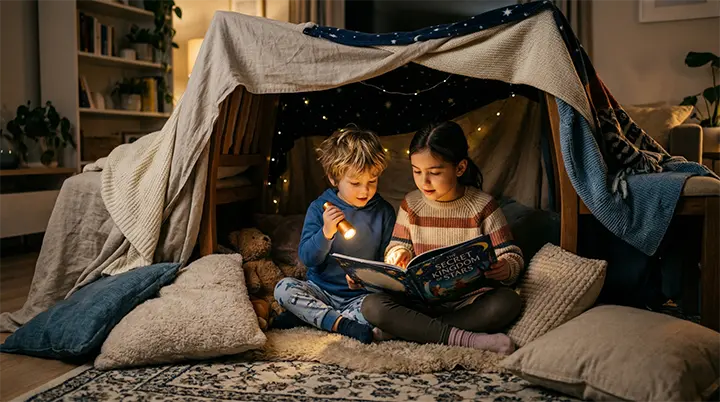
- The Classic Living Room Fort: Push the couches together and drape your heaviest blankets over the top. A dark, cozy fort instantly transforms a normal room into a highly classified secret headquarters.
- Cardboard Box Time Machine: Never throw away a large appliance box. Hand them some washable markers and let them decorate the interior to transport them to the dinosaur age or outer space.
- The Family Post Office: Set up a small table with envelopes, old stamps, and colorful stickers. Encourage them to write “letters” or draw pictures to physically deliver to different family members’ bedrooms.
- Sock Puppet Theater: Repurpose lonely, mismatched socks by drawing faces on the toes with a permanent marker. Have them hide behind the sofa to put on an elaborate, entirely unscripted comedy show.
- The Indoor Campground: Pitch a small pop-up tent in the living room and roll out their heavy sleeping bags. Serve them “campfire” snacks like pretzels and marshmallows while reading stories by flashlight.
- Restaurant Roleplay: Let them design a custom paper menu featuring their absolute favorite easy snacks. Give them a small notepad to take your order and pretend to serve you a five-star meal.
- The Library Checkout Desk: Have them gather a massive stack of their favorite picture books. They can play “librarian” by stamping the inside covers and checking the books out to their stuffed animals.
- DIY Dress-Up Trunk: You do not need expensive, pre-made, branded costumes. Fill a box with your old scarves, oversized hats, and bright costume jewelry to inspire endless character creations.
- The Stuffed Animal Hospital: Provide them with some real fabric bandages and an old toy stethoscope. They will spend hours deeply focused on diagnosing and gently caring for their plush patients.
- Audiobook Drawing Sessions: Put on a high-quality, screen-free audiobook in the background. Hand them a blank sketchbook and ask them to draw exactly what they hear happening in the story.
By heavily relying on these narrative screen-free weekend activities, you actively build their cognitive endurance. They slowly learn how to follow a storyline, anticipate logical outcomes, and express complex emotions safely. It is a highly powerful form of play that pays massive dividends in their overall mental development and academic readiness.
These particular screen-free weekend activities are incredibly beneficial for siblings, too. It forces them to negotiate leadership roles, share creative control, and successfully collaborate on a shared vision. The conflict-resolution skills they learn in the living room fort will translate directly to their future social interactions in the real world.
Fostering this type of creative independence is the ultimate goal of curating your screen-free weekend activities. You are giving them the ultimate gift: the profound ability to find joy and entertainment within their own minds. When they finally realize that they do not need a tablet to have fun, their entire demeanor shifts towards a much more peaceful, contented state.

Activities 31-40: The Power of Printables & Paper-Based Puzzles
Finding sustainable screen-free weekend activities often relies on having the right materials instantly available at a moment’s notice. This is precisely where the true magic of high-quality printables and paper-based puzzles comes into play. They require absolutely zero setup time, no messy clean-up, and they instantly capture a child’s wandering attention when the afternoon slump hits.
When you introduce fresh paper-based screen-free weekend activities, you are actively engaging their critical thinking skills. Puzzles, mazes, and word searches force the brain to work methodically to find a logical solution. This builds a powerful frustration tolerance that digital games, which often rely on instant gratification and flashing rewards, simply cannot replicate in the developing mind.
Curating a dedicated binder of printable screen-free weekend activities is the ultimate parenting hack for exhausted weekends. When the Sunday afternoon restlessness begins, you can simply pull a fresh, unseen activity sheet from your hidden stash. It is the perfect, low-effort bridge between chaotic physical playtime and the calming transition into the evening dinner routine.
Furthermore, these specific screen-free weekend activities provide a deep sense of accomplishment without the dopamine crash of a digital tablet game. They offer a tangible, physical result that a child can proudly hold in their hands and display on the refrigerator for the whole family to see. We know that the psychological benefits of physical books are immense, and physical paper puzzles share that exact same tactile, brain-building advantage.
Here are ten engaging, printable, and paper-based ideas to keep their minds incredibly sharp and your home perfectly peaceful:
- The Custom Comic Book: Print out blank comic strip panels. Challenge them to write and illustrate a short, funny story about the family pet or their favorite stuffed animal’s secret life.
- Intricate Mazes: Keep a stack of challenging, age-appropriate mazes ready in your boredom buster station. They are incredible for developing hand-eye coordination and fine motor control.
- Connect-the-Dots Art: These classic puzzles subtly teach vital number sequencing while resulting in a fun picture they can proudly color afterward.
- Color-by-Number Masterpieces: This structured activity requires deep focus and following specific visual instructions, resulting in a beautiful piece of artwork that builds their creative confidence.
- Scavenger Hunt Checklists: Print out a picture-based checklist for items around the house or out in the backyard. Give them a clipboard and a pencil to excitedly mark off their findings.
- Origami Folding Challenges: Provide square paper and simple visual instructions for making paper boats, airplanes, or jumping frogs. It is an amazing exercise in spatial reasoning and patience.
- Word Searches: For early readers, themed word searches are absolutely fantastic for letter recognition and building a much stronger functional vocabulary without feeling like homework.
- The DIY Restaurant Menu: Print a blank menu template. Have them practice their handwriting by listing the actual dinner items and drawing the accompanying food items alongside the text.
- Spot the Difference: These visual puzzles require intense concentration and observation, perfectly mimicking the engaging challenge of a digital game but in a healthy, analog format.
- Paper Doll Design: Print out sturdy paper dolls and various blank clothing templates. They can spend hours quietly coloring, cutting, and designing custom wardrobes for their characters.
Activities 41-50: Quiet Time, Independent Focus, and Cognitive Growth
As the day winds down, your screen-free weekend activities should naturally transition to calm, highly focused quiet time. This is the crucial period of the day when the house settles, the physical energy drops, and deep cognitive processing takes place in their growing brains. It is absolutely essential for preventing the dreaded pre-dinner emotional meltdowns that exhaust every parent.
Independent screen-free weekend activities give caregivers a much-needed chance to breathe while children independently process the day’s events. You do not need to actively entertain them during this hour; you simply need to provide the right quiet tools and step back. Cultivating the habit of independent rest is a monumental victory for your family’s overall emotional regulation and mental health.
Consistent quiet-time screen-free weekend activities build remarkable cognitive endurance in growing children. When they learn to sit still with their own thoughts and a quiet analog activity, they are practicing intense self-regulation. If you have multiple children in the home, establishing proven sibling storytime strategies during this period can foster deep bonding instead of the usual evening bickering.
Designing these mindful screen-free weekend activities is not about rigid scheduling, harsh rules, or absolute aesthetic perfection. It is simply about establishing a predictable, comforting rhythm that gently signals the child’s brain to slow down. When this rhythm becomes a daily habit, your weekends will feel significantly longer and infinitely more restorative for everyone involved.
Here are ten quiet, focus-driven ideas to beautifully round out your perfect analog weekend:
- The Silent Reading Nook: Create a cozy corner with massive floor pillows and soft blankets. Set a visual sand timer for twenty minutes where the only requirement is looking quietly at books.
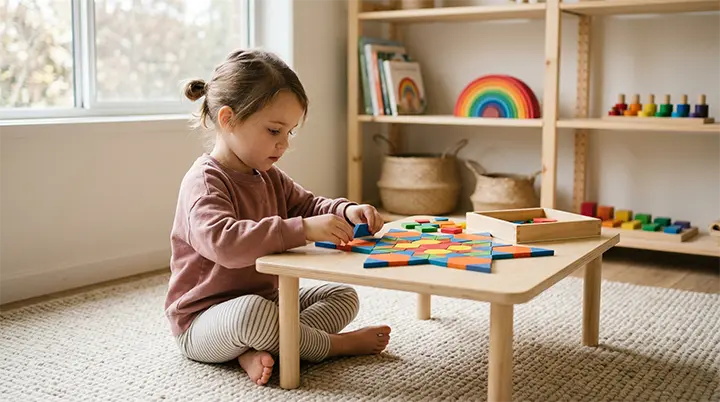
- Pattern Block Puzzles: Give them a set of wooden geometric shapes and matching pattern cards. They must quietly recreate the complex designs using spatial logic and careful placement.
- Bead Threading: Provide a long piece of sturdy yarn and a bowl of large, colorful wooden beads. This highly repetitive fine motor task is incredibly soothing to an overstimulated nervous system.
- The Sensory Calm-Down Bottle: Let them shake a homemade sensory bottle filled with water, clear glue, and fine glitter. They must sit silently and watch until every single piece of glitter settles to the bottom.
- Sticker Mosaic Art: Give them a piece of paper with a simple outline and a massive sheet of tiny, colorful stickers. They fill in the outline to create a quiet, highly focused mosaic masterpiece.
- Audiobook Rest Time: Have them lay quietly on their beds with their eyes closed while listening to a gentle, screen-free audio story to wind down their racing thoughts.
- Window Tracing: Tape a piece of plain paper over a picture on a brightly lit window pane. They can quietly trace the illuminated lines to create their own perfect copy of the artwork.
- Sorting Heavy Buttons: Give them a large mixed jar of assorted vintage buttons and a metal muffin tin. Ask them to silently sort the buttons by size, color, or the number of holes.
- Lacing Cards: Keep a set of sturdy cardboard lacing cards and brightly colored shoelaces. This is a classic, completely silent activity that massively improves their manual dexterity and focus.
- The Memory Tray Game: Place ten small household items on a tray. Let them study it for a minute, cover it with a cloth, remove one item secretly, and ask them to guess what is missing.
Reclaiming the Analog Childhood
Stepping away from the sheer convenience of digital entertainment is undoubtedly challenging in our fast-paced modern era. However, embracing consistent screen-free weekend activities empowers your children to finally reclaim their innate creativity and emotional resilience. You are giving them the ultimate developmental advantage by allowing them to experience the world in a raw, beautifully tactile way.
There will inevitably be moments of resistance, and there will be weekends where the tablet unfortunately wins the battle. Give yourself immense grace on those exhausting days, knowing that building a slow, intentional family culture is a lifelong marathon, not a quick sprint. Every single hour spent building blanket forts, painting garden rocks, or solving paper puzzles is a massive investment in their future emotional intelligence.
Ultimately, prioritizing these screen-free weekend activities builds a beautiful, lasting sanctuary of calm in your busy home. You are not just desperately filling their time to get through to Monday morning; you are actively shaping the way their young minds perceive and interact with the physical world. Stay the course, keep your boredom buster stations fully stocked, and watch their beautiful analog imaginations truly soar.