Digital Products Available Globally | Physical Products currently Shipping to USA, Canada, UK, EU, AU & NZ. ✨ Introductory SALE across all products!


Breaking the Invisible Wall: Gentle Storytelling to Overcome Screen Withdrawal
We have all been there. You hit the power button on the tablet, and instantly, the atmosphere in the living room shifts. The silence is deafening. Then comes the glassy-eyed stare, followed by the inevitable, floor-kicking meltdown. It feels like an invisible wall just slammed down between you and your child. Let’s be real. That abrupt transition from bright, fast-paced cartoons to the quiet reality of the living room is jarring for tiny nervous systems. They are crashing. Hard.
But here is the catch. You do not have to endure the daily tech-tantrum. There is a beautifully simple, analog bridge back to reality, and it relies entirely on your voice. We are talking about gentle storytelling. It is not about reading a complex novel; it is about using the rhythm of your voice to soothe their sensory overload. Mastering this technique is your absolute secret weapon for protecting their developing minds.
🍯
Quick Guide: Gentle storytelling.
Gentle storytelling is a proven strategy to smoothly transition toddlers away from screens. By overlapping your voice with fading tablet audio, you naturally lower cortisol and calm their nervous system. This tactile, zero-prep method prevents sudden dopamine crashes, replacing daily tech-tantrums with deep, analog family connection.
Table of Contents
Why does this matter right now? Because the battle for our children’s attention is fiercer than ever. Apps are designed by literal psychologists to keep little eyes glued to the glass. When we step in to break that spell, we become the bad guys. It is exhausting. But by shifting our approach from restriction to connection, we change the entire dynamic. We go from being the mean parent who took the shiny toy away, to the comforting presence offering a captivating alternative.
The “Screen Hangover”: Understanding the Invisible Wall
To fix the problem, we first need to understand the crash. When your toddler is glued to a screen, their brain is bathed in rapid-fire dopamine hits. The vibrant colors, the loud sounds, the instant gratification—it is an absolute sensory buffet. When you abruptly take that away, they experience a literal “screen hangover.” They are not just being difficult or stubborn. Their brain is suddenly starved of stimulation, and they literally do not know what to do with their own bodies.

I remember the distinct, sharp sound of my favorite ceramic coffee mug shattering because a post-tablet meltdown involved a sudden, dramatic flailing of limbs across the coffee table. Exactly. It is pure chaos.
💡
Did You Know?
Did you know that rapid screen transitions trigger a physiological response in toddlers? The sudden drop in digital dopamine mimics a minor withdrawal, which is why abrupt tablet removal almost always results in a tearful physical crash.
Truthfully, replacing that high-octane digital input with immediate silence or a rigid command to “go play” is a recipe for disaster. They need a transition. That is exactly why gentle storytelling works so brilliantly. It provides a soft, highly engaging landing pad for their overstimulated minds. You intentionally replace the flashing pixels with the comforting, familiar cadence of your own voice.
Think of gentle storytelling as a vocal anchor, gently pulling them back from the digital world and into the present moment without triggering their defense mechanisms.
Common Mistakes When Pulling the Plug
Before we get into the exact mechanics of gentle storytelling, we need to address the elephant in the room. Most of us are making the transition infinitely harder than it needs to be. Listen. We all are tired, and sometimes we just want the digital noise to stop so we can cook dinner in peace. But avoiding these common pitfalls will save your sanity in the long run.
Here are the mistakes sabotaging your screen-free transitions:
- The Abrupt Snatch: Just taking the device without a countdown or a physical warning. This triggers immediate fight-or-flight responses. Hard pass.
- The Over-Explanation: Trying to logic with a toddler who is in the middle of a dopamine crash. “We talked about this, you only get twenty minutes.” They cannot hear you. Their logic center is temporarily offline.
- The High-Energy Pivot: Immediately suggesting an intense physical activity right after a show. They need a slow down, not a sprint.
- The Silent Treatment: Turning it off and expecting them to magically find a wooden toy to play with quietly. They need a sturdy bridge to walk across.
Instead of these panic-inducing methods, using gentle storytelling smooths the rough edges of the transition. It acts as the ultimate sensory reset tool for tired families. By weaving a simple, low-stakes narrative, you give their brain something soft and warm to focus on.
Gentle storytelling does not demand anything from them; it simply offers comfort and presence. The true beauty of this method is that it requires absolutely zero props, zero preparation, and zero cleanup. You just need your voice, a cozy spot on the rug, and a little bit of patience. When you master the art of gentle storytelling, you stop fighting the invisible wall and start melting it away completely.
Why Gentle Storytelling is the Ultimate Pattern Interrupt
Let’s be real. When a toddler is deep in a digital trance, logic simply does not exist. Their brain is locked in a high-speed feedback loop of bright flashing colors and hyper-stimulating sound effects. You cannot just ask them to snap out of it. You have to purposefully interrupt the pattern. And truthfully, gentle storytelling is the most effective, low-stakes way to do exactly that. It does not feel like a punishment; it feels like an exclusive invitation to something better.

Imagine the scenario. You are approaching the couch to turn off the tablet. Instead of delivering the dreaded countdown, you sit down right next to them, look out the window, and softly say, “You know, the strangest thing happened to a little blue bird right outside our glass door today.” You pause. You wait for the shift.
Boom. Pattern interrupted. The familiar, rhythmic tone of your voice completely cuts through the digital noise. By relying on gentle storytelling, you are offering their overstimulated brain a softer, warmer frequency to tune into. This is a foundational pillar of building an analog anchor in their daily routine.
Here is exactly why this vocal transition is so powerful for a growing brain:
- It Shifts the Focus: Instead of aggressively mourning the loss of the glowing screen, their brain immediately starts trying to visualize the characters in your story.
- It Lowers Cortisol: The steady, familiar cadence of your voice physically calms their nervous system, acting as a natural, built-in de-escalator.
- It Demands Zero Effort: They do not have to answer questions, solve a puzzle, or physically move yet. They just have to sit back and listen.
The 5-Minute Bridge Technique
Listen. The biggest hurdle exhausted parents face is the actual, physical moment the screen goes black. If you wait until the device is off to start talking, you are already entirely too late. The meltdown sequence has officially commenced. To avoid the chaos, you need to utilize the 5-Minute Bridge Technique. This is where gentle storytelling truly shines as a preventative tool rather than a desperate, reactive band-aid.
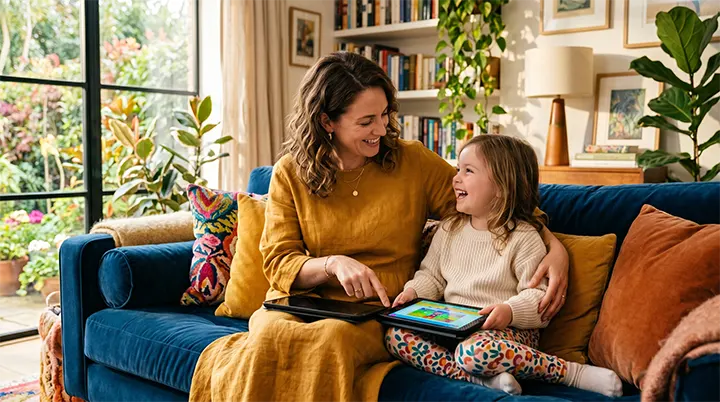
Here is the foolproof, step-by-step blueprint to pulling off the perfect tech transition:
- The Overlap: While the fast-paced show is still playing, sit right beside your child. Do not touch the device. Simply start your gentle storytelling out loud. Make it about something completely unrelated to their cartoon. “I was just thinking about that funny, fluffy squirrel we saw at the park…”
- The Volume Fade: As you speak, slowly reach over and turn the volume of the tablet down just a fraction. Keep your story flowing. Your voice should gradually become the dominant, most interesting sound in the living room.
- The Blackout: Right at the climax of your sentence, when they finally glance over at you to hear what happens next, hit the power button. Keep talking. Do not pause to acknowledge the screen turning off.
- The Physical Redirection: As the story continues, stand up and offer a warm hand. “And then the squirrel ran right into the kitchen—let’s go see if he left any muddy footprints on the tiles!”
💡
Did You Know?
Did you know the sound of a parent’s voice actively reduces cortisol levels in a child’s brain? Gentle storytelling acts as an auditory anchor, physically soothing their overstimulated nervous system far better than absolute silence.
It sounds incredibly simple, but it is pure magic. The first time I tried this specific method, I was fully bracing for impact. I expected the sharp, grating silence that usually precedes a category-five tantrum. Instead, my toddler just blinked, grabbed my hand, and marched into the kitchen looking for imaginary squirrel tracks. I was absolutely stunned. It was the quietest, most peaceful Tuesday afternoon we had experienced in months. Exactly. Pure magic.
But here is the catch. You have to fully commit to the bit. If you hesitate or sound unsure, they will sense the weakness and demand the tablet back. You have to deliver your gentle storytelling with the sheer confidence of an Oscar-winning narrator. Even if you are literally making up a plot about a lost sock looking for its twin, say it like it is the most thrilling saga ever told.
Before you know it, the harsh blue light of the screen is replaced by the warm glow of the afternoon sun, and the electronic beeps are swapped for the sound of actual giggles. If you are actively working on curating better screen-free weekend activities the 5-Minute Bridge is going to become your absolute best friend.
Using gentle storytelling isn’t just a sneaky parenting hack to avoid a fight. It is a profound, loving way to guide their developing minds back to reality. The true beauty of gentle storytelling is that you are actively teaching them how to transition from high-intensity passive consumption to calm, active imagination. And you are doing it with the most comforting sound in the entire world: your own voice.
Crafting Your “Anchor Stories” (No Prep Required)
Let us be brutally honest. At 5:00 PM on a Tuesday, your brain is entirely fried. You have been answering emails, chopping vegetables, and stepping over the same stray Lego brick for three hours. The absolute last thing you want to do is channel your inner Shakespeare and invent a sprawling fantasy epic from scratch. I get it. The mental fatigue of parenting is very real.
This is exactly why you need an arsenal of “Anchor Stories.” You do not need to be a professional author to make gentle storytelling work. You just need a few reliable, modular story frameworks that you can recycle every single day. Toddlers actually crave repetition. Hearing a familiar structure lowers their anxiety and signals that their environment is safe and predictable.

An Anchor Story is basically a mental Mad Libs template. You keep the core structure identical but simply swap out the main character or the setting based on what is within your immediate line of sight. It requires zero mental heavy lifting on your part. If you are currently trying to conquer the 1000 hours outside challenge, these simple narrative frames are perfect for effortlessly moving them toward the front door.
Here are three foolproof Anchor Story frameworks you can steal right now:
Framework 1: The “Lost & Found” Mission
This is perfect for high-energy kids who need a physical, tactile transition. The plot is incredibly simple: a familiar object or animal is lost in your actual house, and they need help finding it.
- The Hook: “Did you know a tiny green frog hopped into our kitchen today looking for a missing strawberry?”
- The Middle: Describe the frog looking under the rug, behind the couch, and inside the washing machine. Use heavy sensory details.
- The Resolution: You physically stand up and say, “I think he went toward the refrigerator—let’s go see if he found it!”
💡
Did You Know?
Did you know that toddlers actively crave repetitive story structures? Hearing familiar narrative frameworks lowers their cortisol and signals environmental safety, which is exactly why simple, recycled “Anchor Stories” are so incredibly effective during high-stress transitions.
Framework 2: The “Sleepy Animal” Wind-Down
If your toddler is completely overstimulated and physically vibrating with tension, use this slow-paced narrative. Speak softly and stretch out your vowels to intentionally force their heart rate to mimic yours.
- The Hook: “There is a very, very sleepy golden retriever puppy who just wants a nap.”
- The Middle: Describe the puppy doing big, dramatic stretches and letting out massive, loud yawns. (Make sure you physically yawn while telling the story it is highly contagious).
- The Resolution: The puppy finds a soft, warm spot on a rug and closes his heavy eyes. “Should we go find a soft spot on your rug, too?”
Framework 3: The “Future Rehearsal”
Sometimes, the invisible wall is strictly caused by transition anxiety. They do not want to turn off the screen because they simply do not know what happens next. This framework solves that by turning your upcoming evening routine into an exclusive adventure.
- The Hook: “In exactly three minutes, a giant bubble volcano is going to erupt in the bathtub upstairs.”
- The Middle: Describe the specific toys waiting by the tub and the exact smell of the lavender soap. Give them hyper-specific visuals to latch onto.
- The Resolution: “The bubbles are getting higher and higher! We have to go catch them before they spill over!”
You do not need magic to break the screen trance; you just need a solid anchor. By relying on these repeatable structures, you remove the stress of performance and focus entirely on connection.
Handling the Meltdowns When the Story Doesn’t Work Immediately
Let us drop the illusion of perfection for a second. We can sit here and talk about gentle storytelling all day, but you and I both know the reality of toddlers. Sometimes, despite your absolute best efforts, the story simply will not work. You will execute the transition perfectly, your voice will be incredibly soothing, and they will still throw themselves face-first onto the living room rug.

They will scream. They will kick. The invisible wall will slam down so hard it rattles the windows. It happens.
I remember a Tuesday evening meltdown so spectacular it almost defied physics. The tablet was turned off, and my usually sweet toddler responded by shrieking so loudly the neighbor’s dog started howling in solidarity. Tiny fists were clenched tight, tears were flying, and absolutely nothing I said could pierce the noise. In that moment, I realized trying to talk over a screaming child is completely useless. It just adds to their sensory overload.
When gentle storytelling fails on impact, you have to immediately shift your strategy. You stop talking, and you hold the boundary with your physical presence instead.
The “Wait and Whisper” Strategy
This is the hardest part of the entire screen-free transition process. You have to let them crash. Their nervous system is desperately trying to regulate a massive dopamine deficit. They are essentially experiencing a miniature withdrawal. If you panic and hand the tablet back just to stop the crying, you are only hitting the snooze button on the inevitable tantrum. You have to ride it out.
Instead of raising your voice to match theirs, drop your volume completely. I call this the “Wait and Whisper” strategy.
Sit down on the floor near them. Do not try to force them into a hug if they are actively flailing. Just sit. Keep your breathing slow, deep, and audible. When they finally pause to take a sharp breath and they always have to pause eventually whisper something incredibly simple and true. “I am right here. You are safe. I know you are mad.”
That is it. Do not try to reason with them about why screen time is over. Do not explain the rules again. If you are struggling to manage these gaps in the day, teaching them how to navigate unstructured time is a long game, not an overnight fix. They just need to know the storm is allowed to happen.
Holding the Analog Boundary
The first time you hold this line, it might take twenty minutes for the storm to pass. The second time, it might take ten. By the fifth time, they will realize that the boundary is entirely immovable. You are not going to yield, but you are also not going to abandon them in their frustration.
Once the tears finally slow down and the heavy, ragged breathing starts, that is your window. That is exactly when you restart the gentle storytelling. Do not mention the tablet. Do not mention the crying. Just softly resume the narrative right where you left off. “Anyway, the little green frog finally found a soft pile of leaves to rest on…”
💡
Did You Know?
Did you know that attempting to reason with a screaming toddler is neurologically useless? During a meltdown, their logic center temporarily shuts down, meaning a silent, calm physical presence is infinitely more effective than verbal discipline.
It takes immense emotional stamina. But when they finally crawl into your lap, wipe their face, and listen to the end of the story, you will know you just won a massive victory for their emotional resilience.
Zara’s Go-To Storytime Tools for Exhausted Evenings
Let us set the record straight. While gentle storytelling technically requires absolutely zero equipment, there are evenings when your personal battery is blinking red. You are completely drained. On those nights, relying solely on your own theatrical willpower is a massive mistake. You need environmental assists. You need tools that do half the heavy lifting for you. Over the years, I have curated a specific arsenal of physical objects that instantly signal to a toddler’s brain that the digital world is closing and the analog world is opening. These are not toys; they are environmental cues.

If you try to transition a child from a hyper-stimulating cartoon straight into a brightly lit, chaotic living room, you are setting yourself up for failure. The environment itself has to change. Think of it like a theater. When the movie ends, the house lights do not just abruptly snap on at full brightness. There is a gentle, dimming transition. You have to recreate that exact same atmospheric shift in your own home to help their tiny nervous systems physically downshift.
The Warm Amber Reading Lamp
Overhead lighting is the absolute enemy of a calm screen-free transition. Bright, white LED ceiling lights essentially tell the human brain that it is high noon. Instead, the very second you start your five-minute storytelling bridge, you need to turn off the main lights and click on a small, warm amber reading lamp. The deep orange glow perfectly mimics a natural sunset. It instantly lowers the energy in the room and physically triggers their brain to start producing melatonin.
I keep a beautiful, brass-finished amber lamp right next to our dedicated reading corner. The simple, satisfying click of that lamp turning on has become an auditory trigger for my kids. It means the loud part of the day is officially over. The soft shadows it casts on the walls actually make the storytelling experience feel far more magical and immersive, giving their tired eyes a much-needed break from the harsh blue light of the tablet.
💡
Did You Know?
Did you know that harsh, white overhead lighting physically suppresses natural melatonin production? Switching entirely to a warm amber reading lamp instantly signals the brain that it is time to wind down, making evening transitions significantly smoother.
The Grounding Floor Cushion
Location memory is incredibly powerful for toddlers. If they always watch their tablet while sitting on the left side of the living room couch, you cannot expect them to peacefully listen to a story in that exact same spot. Their brain is still expecting the screen to appear. You have to completely change their physical elevation and location. This is why investing in a massive, heavy, premium floor cushion is an absolute necessity.
By moving the story down to the floor, you create a distinct, physical boundary. The floor cushion becomes an analog island. When we sit on the velvet cushion, the rules completely change. It is soft, it is grounding, and it forces them to physically reorient their bodies. Sitting at a lower level naturally drops their heart rate and encourages them to sprawl out, relaxing the rigid muscle tension that screen time often causes.
The Tactile “Whisper Object”
One of the biggest symptoms of screen withdrawal is fidgety, restless hands. When the tablet is taken away, their fingers are literally searching for something to tap or swipe. You have to replace that digital input with a heavy, tactile distraction. I use what I call a “Whisper Object.” It is usually a heavy, polished river stone or a small, intricately carved wooden block. I hand it to them right as the story begins.
Having a smooth, cool object to roll around in their palms completely absorbs their residual nervous energy. It gives their hands a job so their ears can focus on the story. It is a fascinating cross-species psychological trick. Just like providing a high-quality snuffle mat instantly calms the frantic energy of an overstimulated puppy by forcing them to use their nose, giving a child a heavy sensory object instantly grounds their frantic nervous system.
The Screen-Free Audio Player Backup
Let us be completely honest. There are simply going to be Tuesday nights where you have a sore throat, a looming deadline, and zero patience. You cannot muster the energy to tell a story about a little green frog. For these exact moments, a screen-free audio player is your ultimate safety net. Devices that use physical cards or figures to play stories offer the exact same auditory transition without the harmful blue light.
The physical act of letting them push the character into the top of the box satisfies their need for control, while the audio track provides the gentle vocal rhythm they desperately need to decompress. If you are trying to manage multiple kids during this chaotic evening window, incorporating an audio player is one of the most effective sibling storytime strategies you can deploy. It allows you to calmly settle the toddler while the older child remains perfectly captivated.
Quick Guide: Gentle Storytelling for Immediate Relief
Let us distill everything down to the absolute essentials. If you are standing in your kitchen right now, clutching a cold cup of coffee, and bracing yourself to turn off the television, you do not have time to reread a massive guide. You need immediate, actionable steps. This quick reference guide is designed to be your mental cheat sheet. Memorize these four core principles, and you will fundamentally change the energetic frequency of your living room tonight.

Step 1: The Pre-Transition Anchor
Do not wait for the screen to go black to establish your presence. Step into their physical space while the digital stimulation is still highly active. Sit down right next to them on the rug. Take a deep, audible breath. You are literally bringing your calm, regulated nervous system into their chaotic orbit. This is the physiological equivalent of offering a sturdy life raft before the boat actually begins to sink.
Step 2: The Soft Fade
Never rely on the abrupt, harsh snatch. Slowly turn down the volume of the device while simultaneously increasing the volume of your own voice. You want your gentle storytelling to seamlessly overlap with the fading cartoon audio. If you just rip the tablet away, you are plunging their overstimulated brain into a sensory void. That void is terrifying for a toddler, and they will immediately fill that silence with screaming. The auditory crossfade is your ultimate safety net.
Step 3: The Tactile Redirection
As the story concludes, seamlessly place a heavy, physical object into their hands. It could be a wooden block, a smooth river stone, or a beautifully bound hardcover book. Giving their restless fingers a tangible, analog job completely short-circuits their brain’s desperate desire to swipe a glass screen. The sheer weight of the object anchors them to the present moment. You are essentially tricking their nervous system into focusing on the texture of the wood rather than the absence of the flashing pixels.
💡
Did You Know?
Did you know that offering a heavy, tactile object during a screen transition satisfies a toddler’s lingering physiological urge to swipe and tap? It brilliantly redirects their residual nervous energy into quiet, analog sensory play.
Step 4: The Immovable Boundary
If the invisible wall still comes down and the tears start flowing, you hold the line. You do not negotiate. You do not offer five more minutes. You cannot cave just because the tantrum gets loud. If you give the screen back, you have just taught them that screaming is the currency required to buy more digital time. Just like finding the perfect high value dog training treats to completely break a stubborn puppy’s frantic fixation, your calm, unwavering consistency is the ultimate pattern interrupt for a toddler. You are the immovable rock in their emotional storm.
Frequently Asked Questions About Screen Transitions
Let us tackle the most common, frustrating hurdles parents face when implementing these analog strategies. When you are deeply committed to unlocking those essential analog childhood benefits, you are bound to run into a few incredibly stubborn roadblocks. Here are the exact, field-tested answers to your most pressing tech-transition questions.
1. How long does the typical “screen hangover” actually last?
A standard screen hangover typically lasts between ten to twenty minutes. This is the exact amount of time it takes for a toddler’s overstimulated brain to naturally recalibrate its dopamine levels and physically adjust to the slower, quieter pace of an analog environment.
2. What if my child completely refuses to listen to the gentle story?
If they cover their ears or scream, immediately stop talking. Their auditory sensory system is currently overwhelmed. Simply sit near them in total silence. Wait for the absolute peak of the tantrum to naturally subside before softly resuming the story. Do not force the narrative.
3. Should I use a visual timer to warn them before the screen goes off?
Yes, visual timers are incredibly effective for older toddlers. A classic sand timer or a color-fading digital clock provides a concrete, undeniable visual boundary. It removes the blame from you and places the authority strictly on the objective timer, dramatically reducing parent-directed anger.
4. Does the type of cartoon affect the severity of the withdrawal meltdown?
Absolutely. High-intensity shows with rapid scene cuts, flashing colors, and hyper-energetic audio tracks cause massive dopamine spikes. Transitioning away from these chaotic shows guarantees a much harder emotional crash compared to slower-paced, gently animated shows that authentically mimic real-time pacing.
5. Can an older sibling help execute the gentle storytelling method?
Yes, older siblings are actually phenomenal at this. Toddlers naturally idolize older kids. Having a six-year-old start a goofy, highly animated story about a lost dinosaur is often much more captivating and pattern-breaking to a toddler than listening to an exhausted parent.
6. How do I manage screen transitions in a loud public space like a restaurant?
In public, you must rely heavily on tactile objects rather than loud stories. Hand them a heavy metal spoon or a smooth wooden toy the exact second the phone goes away. Whisper your story directly into their ear to create a highly private, calming bubble.
7. Is it normal for the transition to be significantly harder on weekends?
Yes, unstructured weekend time often lacks the rigid, predictable boundaries of a school day. When rules feel flexible, kids push harder. Maintaining a strict, predictable routine for screen-free transitions is absolutely vital, even on a deeply relaxed Saturday morning.
8. Will this gentle transition method work for older children and pre-teens?
The core principle absolutely remains the same, but the delivery must naturally mature. Instead of a fairy tale, initiate a conversation about a highly specific, shared interest like a favorite video game strategy or a new music release right before the screen formally turns off.
Conclusion: Embracing the Analog Shift
We have covered a massive amount of ground today. If you are reading this while hiding in the pantry to eat a secret chocolate bar after a particularly brutal screen-time battle, I see you. Take a deep breath. You are not failing. Modern parenting is an incredibly loud, overstimulating marathon. Apps and tablets are engineered to be hopelessly addictive. When you step in to break that digital trance, you are doing the hard, deeply unglamorous work of protecting their developing brains. It is exhausting. But it is also entirely worth it.
The goal here is not to achieve some impossible, perfectly aesthetic 1950s household where screens simply do not exist. Let us be realistic. Sometimes, you absolutely need twenty minutes of peace to fold the laundry or simply stare blankly at the kitchen wall. Screens are tools. But like any sharp tool, we have to teach our kids how to safely put them away. Gentle storytelling is the soft, padded sheath for that transition. It softens the absolute shock of the invisible wall crashing down.
Think about the long-term cognitive payoff. By replacing an abrupt power-down with a five-minute vocal bridge, you are actively rewiring their nervous system. You are teaching them how to independently regulate a sudden dopamine crash. This is not just a trendy parenting hack; it is foundational brain science. According to research from early childhood development experts at Harvard University, these responsive, back-and-forth verbal interactions build critical neural pathways. You are literally building their emotional resilience with nothing but your voice and a little bit of patience.

It will feel incredibly clunky the first few times you try it. You will likely stumble over your words, forget the plot of your own anchor story, and feel slightly ridiculous whispering about a lost green frog while your toddler kicks the couch. Keep going. The magic is not in the perfection of the plot. The magic is entirely in the rhythmic, predictable comfort of your vocal frequency. Your voice is the ultimate grounding mechanism in their chaotic little world.
As you slowly implement these analog strategies, the entire atmosphere of your home will begin to shift. The frantic, post-tablet hyperactivity will gradually soften into a more sustainable, creative energy. You will notice them independently reaching for wooden blocks or a beautifully illustrated hardcover book instead of begging for the glass screen. If you want to dive deeper into the science of this shift, I highly recommend exploring the psychological benefits of physical books to understand exactly why their brains naturally crave tactile engagement over digital input.
The Ripple Effect of Analog Patience
When you commit to gentle storytelling, you are not just solving a Tuesday evening tantrum. You are fundamentally changing how your family communicates under stress. You are modeling extreme emotional regulation. When your toddler sees you remaining completely calm and creative in the face of their chaotic meltdown, they internalize that safety. They learn that their big, scary, post-screen feelings are not actually emergencies. They are just passing storms. Exactly. You become their emotional umbrella.
💡
Did You Know?
Did you know that the physical weight and texture of a tangible book physically grounds a child’s nervous system? Tactile engagement actively repairs the fractured attention span caused by passive, repetitive digital swiping.
This ripple effect spills over into every other aspect of your daily routine. Kids who learn how to smoothly transition away from high-stimulation digital environments naturally become better at transitioning away from the playground, out of the bathtub, and into their beds at night. You are giving them a universal blueprint for handling disappointment. It is a slow, steady investment in their future emotional intelligence, paying massive dividends in the form of a more peaceful, cooperative household.
Your Next Steps for a Screen-Free Evening
So, where do you start tonight? Keep it incredibly simple. Do not try to overhaul your entire parenting philosophy by 5:00 PM. Pick just one anchor story framework from the list above. Rehearse it in the shower if you have to. Stage your warm amber reading lamp and a heavy, tactile floor cushion. When the time comes to power down the tablet, initiate the five-minute bridge. Overlap the audio. Fade the volume. Start the story.
Celebrate the tiny victories. If the meltdown lasts ten minutes instead of twenty, that is a massive win. If they grab the smooth river stone instead of swatting your hand away, that is genuine progress. We are playing a very long, very beautiful game here. Embracing the analog shift is a journey of a thousand tiny, intentional steps. The next time the glassy-eyed stare locks in, do not panic. Grab a cup of warm tea, take a deep breath, and trust the power of your own story.