Digital Products Available Globally | Physical Products currently Shipping to USA, Canada, UK, EU, AU & NZ. ✨ Introductory SALE across all products!


The 1000 Hour Outdoors Challenge A Practical Urban Guide
The Urban Reality of the 1000 Hour Outdoors Challenge
Welcome to the beautiful, chaotic reality of modern parenting in a concrete jungle. You have likely seen the viral posts and idyllic photos flooding your social media feeds recently. The 1000 hour outdoors challenge has taken the internet by storm, promising immense benefits for developing children. It sounds absolutely beautiful in theory, painting a picture of carefree kids chasing fireflies until dusk.
Table of Contents
But for parents living in high rise apartments or bustling city centers, this trend can feel incredibly isolating. You might picture families with sprawling green backyards and private creeks, wondering how you can possibly compete. Many city families feel entirely defeated before they even attempt the 1000 hour outdoors challenge because they simply lack a private yard. The math of spending roughly two and a half hours outside every single day seems impossible between commutes and elevator rides.
We need to completely redefine what the 1000 hour outdoors challenge looks like for the modern urban dweller. It is time to drop the guilt and realize that city living offers its own rich, vibrant landscape for childhood exploration. You do not need a private forest to give your child the immense cognitive and physical benefits of nature. Successfully participating in the 1000 hour outdoors challenge means embracing intentionality over acreage.
The city sidewalk, the local pocket park, and even your small apartment balcony all count toward this incredible goal. To conquer the 1000 hour outdoors challenge without burning out, we have to shift our perspective on what qualifies as meaningful outdoor time. It is about consistent, mindful exposure to the elements rather than retreating to the wilderness. Let us explore exactly how your urban family can adapt and thrive within this movement.
The Science of the Nature Deficit and Cognitive Growth
Before we dive into the practical steps, it is vital to understand the profound “why” behind this movement. Child psychologists and developmental experts are increasingly warning us about the alarming rise of the nature deficit. As children spend more time indoors, entirely surrounded by climate controlled environments and flat digital screens, their sensory development can stagnate. The developmental benefits of the 1000 hour outdoors challenge are deeply rooted in giving children back their multi sensory world.
When a child steps outside, even onto a busy city street, their brain is instantly forced to process a complex array of natural stimuli. They feel the unpredictable wind, hear the distant sirens layered over chirping city birds, and navigate uneven pavement. This real world navigation is absolutely critical for building strong spatial awareness and robust cognitive resilience. An analog childhood provides the fundamental building blocks for creative problem solving and emotional regulation.
We must actively approach the 1000 hour outdoors challenge with a clear understanding of how tactile learning shapes the growing mind. Natural environments, even urban ones, offer a type of gentle fascination that completely restores a child’s attention span. Unlike the hyper stimulating dopamine hits of a tablet, the outdoors allows their nervous system to reset and calibrate naturally. Implementing a digital detox becomes significantly easier when it is replaced by engaging outdoor exploration.
It is important to remember that the core goal of the 1000 hour outdoors challenge is not simply to clock hours on a stopwatch. The true objective is to foster a lifelong, deeply rooted connection with the physical world around them. Even a short walk to the corner store exposes them to shifting weather patterns, changing seasons, and community interactions. Every single minute spent breathing fresh air actively contributes to a healthier, more balanced, and grounded child.
Micro Exposures Redefining Outdoor Time for the City Dweller

The absolute secret to making the 1000 hour outdoors challenge a reality in the city is mastering the art of the micro exposure. We often fall into the trap of believing that outdoor time only counts if it involves a massive, exhausting expedition. Packing the stroller, preparing snacks, and commuting to a major park can feel like a daunting task on a busy Tuesday. You need to adapt the 1000 hour outdoors challenge for your actual, everyday reality by finding nature in the margins.
Instead of aiming for one massive three hour block of outdoor time, break your day down into tiny, actionable bites. A customized urban 1000 hour outdoors challenge requires you to look at your existing routine and simply move parts of it outside. These small pockets of time seamlessly add up, rapidly accelerating your progress without adding massive stress to your schedule.
Here are highly effective, low effort micro exposures to heavily boost your outdoor hours this week:
- The Balcony Breakfast Routine: Move your child’s morning oatmeal or weekend pancakes to the balcony or patio, actively counting that twenty minutes of fresh air.
- The Long Way Home: Deliberately choose the slightly longer, tree lined route when walking back from daycare or the local grocery store.
- The Mailbox Expedition: Turn the simple chore of checking the mail or taking out the recycling into a ten minute, slow paced toddler adventure.
- The Bakery Walk: Instead of driving or ordering delivery, make the weekend morning pastry run a dedicated family walk to support local businesses.
- The Stoop Sit: Simply sitting on your front steps with a warm drink while your child watches the city traffic and neighborhood dogs pass by.
- The Sunset Observation: Dedicate fifteen minutes every evening to stand outside and purposefully watch the sky change colors before beginning the bedtime routine.
Every single item on this list is a valid, powerful way to bank time for the challenge. Long term success in the 1000 hour outdoors challenge looks like a patchwork quilt of these small, beautiful daily moments. You do not need to wait for the perfect weather or the perfect weekend to give your child an incredible screen-free childhood experience. By embracing these micro exposures, you effortlessly weave the outdoors into the very fabric of your family life.
The Concrete Jungle Sensory Walk Engaging Toddlers Without a Forest
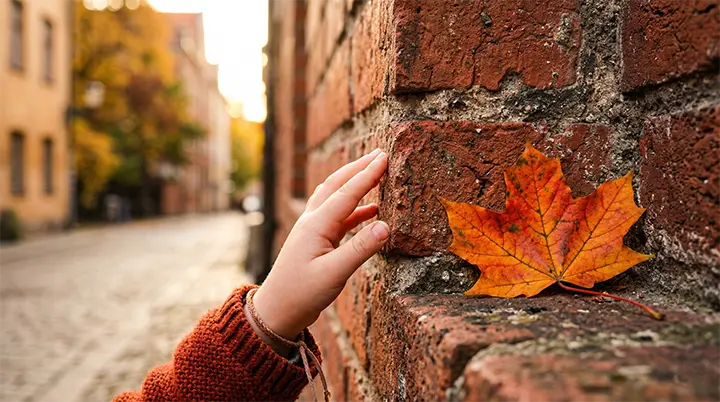
When we imagine deep sensory play, we often picture pristine coastal beaches or dense, quiet woodland trails. However, the modern urban environment is packed with incredibly rich textures and fascinating acoustic experiences for a developing brain. You do not need a secluded forest to create a profound nature connection during your 1000 hour outdoors challenge journey. The concrete jungle offers a vibrant, ever changing landscape of sensory inputs that are deeply beneficial for cognitive growth.
Transforming a standard sidewalk commute into an intentional sensory walk is a cornerstone of the urban 1000 hour outdoors challenge strategy. Instead of rushing from the apartment lobby to your final destination, purposefully slow down and allow your child to investigate the built environment around them. Encourage them to physically feel the rough, weathered texture of historic brick buildings or the smooth, cool surface of a painted metal handrail. Listen together to the rhythmic hum of city traffic layered gracefully beneath the sudden, sharp chirp of a neighborhood bird.
This deliberate slowing of our pace is an incredibly powerful tool for parental mindfulness and child emotional regulation. When we guide our children to focus on these micro details, we actively help them ground their nervous systems naturally. This is especially helpful after a long, highly structured day of preschool learning or busy daycare environments. In fact, these intentional urban sensory walks are a perfect companion to our low stimulation activities for after school resets.
Puddles left on the dark asphalt after a sudden city rainstorm are magnificent opportunities for immersive tactile learning. A small pile of fallen autumn leaves gathered around a glowing streetlamp can spark just as much joy as a massive rural leaf pile. To successfully rack up hours for the 1000 hour outdoors challenge, we must train ourselves to see the absolute magic in these mundane city streetscapes. Every single textured surface and unexpected urban nature encounter adds immense value to their developmental bank.
According to extensive research published by the Harvard University Center on the Developing Child, supportive environmental experiences build robust neural circuits in the early years. The 1000 hour outdoors challenge is fundamentally about providing these consistent, supportive environmental exposures, regardless of exactly where you live. By engaging all of their developing senses on a bustling city block, you are actively wiring their brain for lifelong resilience and deep focus.
Essential Weather Proof Gear for the Urban Child
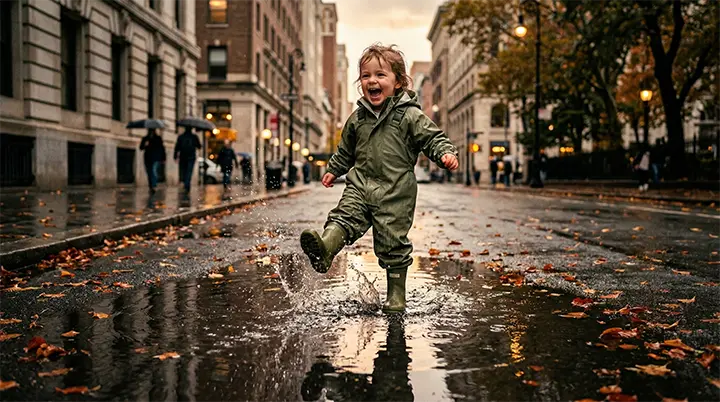
One of the biggest, most discouraging hurdles urban parents face when attempting the 1000 hour outdoors challenge is navigating unpredictable weather. In the city, you cannot simply retreat to the warmth of the living room the moment it starts to drizzle or the wind suddenly picks up. Because you rely heavily on walking, strollers, or public transit, being caught in inclement weather can quickly derail your outdoor goals for the week. Mastering the 1000 hour outdoors challenge requires a fundamental shift in how we dress our children for the changing elements.
There is a popular Scandinavian parenting philosophy that insists there is no such thing as bad weather, only bad clothing choices. This mindset is absolutely essential for families participating in the 1000 hour outdoors challenge within a heavily paved, concrete environment. Investing in high quality, sustainable weather gear means the rain and snow become exciting new textures rather than valid reasons to stay inside. A well dressed, comfortably dry child is a happy child, fully capable of exploring the wet city streets for extended, uninterrupted periods.
Curating a highly functional, weather proof wardrobe entirely prevents the daily frustration of washing soaked everyday clothes. It also empowers your child to fearlessly splash in urban puddles without the immediate threat of becoming chilled or uncomfortably damp.
Here are the essential gear items every city parent needs to confidently conquer the 1000 hour outdoors challenge year round:
- The Premium Unlined Rain Suit: A one piece, fully waterproof suit is practically non negotiable for active city living. It allows your toddler to sit directly on wet park benches or damp pavement without completely soaking their valuable base layers.
- High Traction Rubber Mud Boots: City streets grow incredibly slick, and standard lightweight rain boots often lack the grip needed for wet subway grates and smooth asphalt. Look for boots with a deep, rugged tread designed specifically for active, secure urban walking.
- The Windproof Stroller Cover: For the youngest participants of the 1000 hour outdoors challenge, a breathable but completely windproof cover is vital. It allows sleeping infants to safely clock outdoor hours while heavily protected from harsh city wind tunnels.
- Merino Wool Base Layers: Standard cotton quickly traps moisture and makes children shiver rapidly in damp, gray urban conditions. Sustainably sourced merino wool regulates their body temperature perfectly, keeping them brilliantly warm even if they manage to get slightly damp.
- Waterproof Insulated Mittens: Cold, wet hands are the fastest, most guaranteed way to end an urban sensory walk prematurely. Invest in extended cuff waterproof mittens that slide directly over their winter jacket sleeves to prevent cold water from dripping inside.
Equipping your growing child with these five foundational pieces completely transforms your daily approach to the 1000 hour outdoors challenge. A rainy, dreary Tuesday is no longer viewed as a wasted day trapped indoors watching digital screens. Instead, it becomes a beautiful, highly anticipated opportunity to quietly observe how your city transforms under a heavy, dramatic downpour.
Weekend Park Hopping The Catch Up Strategy

While daily micro exposures during the week serve as the foundation, the weekends are where urban families can truly accelerate their hourly progress. Balancing a demanding full time job, exhausting city commutes, and the 1000 hour outdoors challenge during the week can sometimes feel mathematically impossible. This is exactly where the strategic, highly intentional weekend catch up method becomes an absolute lifeline for busy, overwhelmed parents. By deliberately dedicating Saturday and Sunday mornings to extended outdoor time, you alleviate the immense, crushing pressure of the Monday through Friday grind.
Dedicated weekend park hopping is an incredible way to log significant hours for the 1000 hour outdoors challenge while simultaneously exploring new neighborhoods. Instead of simply visiting your standard, highly familiar local playground, make a grand event out of traveling to a larger, destination park across the city. Pack a beautifully curated, highly nutritious, zero waste lunch and confidently plan to spend a minimum of three to four uninterrupted hours outside. This concentrated, heavy block of time provides the deep, restorative nature immersion that the 1000 hour outdoors challenge aims to consistently deliver.
To easily keep these long stretches engaging without ever relying on digital devices, lean heavily into structured but entirely analog play. Bring along beautiful, open ended items like physical nature journals, high quality magnifying glasses, or a simple, classic fabric kite. If you find yourself needing fresh inspiration to effortlessly fill these longer blocks, reference our screen-free weekend activities guide for creative, low stimulation ideas. The ultimate goal is to let them confidently lead the exploration, whether that means quietly studying a line of city ants or building a grand structure from fallen urban branches.
Do not ever feel guilty if your weekday 1000 hour outdoors challenge contributions are strictly limited to brief walks and quick balcony breakfasts. The inherent beauty of this analog movement is that it functions as a cumulative, year long marathon, not a frantic daily sprint. A massive, joyful five hour park session on a crisp Sunday beautifully balances out the much shorter twenty minute exposures during a chaotic workweek. Consistency over the long term, rather than daily perfection, is the true secret to mastering the 1000 hour outdoors challenge.
Citizen Science in the Park Intentional Play in Shared Spaces

As your family becomes more comfortable with the urban 1000 hour outdoors challenge, you will naturally start looking for ways to deepen the experience. Wandering aimlessly is wonderful for toddlers, but older children often crave a distinct sense of purpose during their park visits. This is where the brilliant concept of citizen science becomes a highly valuable tool for city parents. By introducing simple observation tasks, you effortlessly transform a basic playground visit into a profound educational expedition.
Equipping your child with a small magnifying glass and a sturdy notebook completely changes how they interact with their environment. Encouraging them to physically draw the unique leaves they find reinforces the psychological benefits of physical books and paper. They learn to document the changing urban seasons, noting which city birds appear in autumn versus spring. This analog documentation makes their contributions to the 1000 hour outdoors challenge feel incredibly tangible and rewarding.
Shared urban spaces are teeming with fascinating micro ecosystems if you simply know where to look. Peeking under a damp park bench to discover a bustling ant colony offers immense tactile learning opportunities. If your family includes a canine companion, these slow paced observation walks perfectly complement your work from home dog strategies by providing mental enrichment for everyone. The entire family benefits simultaneously from the deliberate, grounded pace required by the 1000 hour outdoors challenge.
You do not need to be a trained biologist to guide these citizen science moments effectively. Simply asking open ended questions about why a certain city tree lost its leaves early sparks deep cognitive engagement. The 1000 hour outdoors challenge is not about providing all the correct answers immediately. It is fundamentally about teaching your child how to ask beautiful, curious questions about the natural world surrounding them.
These intentional play sessions in shared parks actively build a profound sense of community respect and environmental stewardship. When a child carefully observes a fragile urban spiderweb, they learn to appreciate and protect their local neighborhood spaces. Clocking time for the 1000 hour outdoors challenge in this mindful way guarantees that the hours spent outside are deeply meaningful.
Bringing the Outside In Creating a Nature Table

We must realistically acknowledge that some city days are simply too brutal for extended outdoor exploration. Subzero temperatures, dangerous urban heatwaves, or severe thunderstorms will inevitably force your family to pause the 1000 hour outdoors challenge temporarily. However, a pause in your outdoor hours does not mean a pause in your child’s vital connection to nature. You can seamlessly bridge this gap by bringing carefully selected elements of the concrete jungle directly inside your apartment.
Creating a dedicated nature table is a beautiful, Montessori inspired solution for connecting indoor and outdoor play. This dedicated space allows your toddler to continue investigating natural textures even when safely sheltered from extreme weather. It acts as a physical anchor for your ongoing 1000 hour outdoors challenge, keeping the momentum alive on deeply rainy afternoons.
During your shorter micro exposures, encourage your child to responsibly forage for durable, interesting urban nature items. A handful of smooth river stones from a landscaping bed or a beautifully intact pinecone can become treasured possessions. When you return home, deliberately arrange these found treasures on a low, easily accessible wooden tray or table. This practice perfectly complements a well styled reading corner, sitting beautifully alongside a forward-facing bookshelf to encourage independent learning.
Here are several excellent, mess free items city families can collect to enhance their indoor nature tables:
- Dried, uniquely shaped autumn leaves gathered from the local neighborhood sidewalk.
- Smooth, polished stones found near decorative urban water features or park pathways.
- Fallen twigs and small branches with interesting bark textures.
- Stray feathers dropped by local city birds during the spring molting season.
- Dried seed pods or robust acorns discovered beneath mature street trees.
By actively rotating these items as the urban seasons change, the nature table remains a dynamic, fascinating focal point. It proves that the philosophy behind the 1000 hour outdoors challenge extends far beyond simply standing outside. It is about cultivating a lasting, deeply respectful curiosity for the physical world that permeates every aspect of your home life.
Tracking Progress Without the Pressure The Analog Way
In our modern, hyper connected era, the immediate instinct is to download a digital app to track our parenting goals. However, utilizing a glowing screen to monitor an anti screen movement like the 1000 hour outdoors challenge is highly counterproductive. Relying on your smartphone to clock minutes subtly pulls your attention away from the beautiful, present moment you are sharing with your child. We strongly advocate for leaving the digital trackers behind and embracing a completely analog approach to monitoring your success.
A physical, beautifully illustrated paper tracker hung prominently on the family refrigerator is vastly superior for a child’s comprehension. Toddlers cannot conceptualize data hidden away in a parent’s digital smartphone application. When they get to physically color in a small leaf or sun icon after a long park visit, the achievement becomes real. This tangible reward system is absolutely essential for maintaining their long term enthusiasm for the 1000 hour outdoors challenge.
Using an analog tracker also significantly reduces the toxic, high pressure perfectionism that often plagues modern city parenting. If you miss a few days because of an intense work deadline, a paper tracker simply waits patiently without sending stressful push notifications. You are gracefully reminded that the 1000 hour outdoors challenge is a gentle lifestyle shift, not a rigid, punitive academic test.
Make the simple act of updating your paper tracker a cherished part of your calming evening wind down routine. After washing off the city grime, sit down together with a box of crayons and reflect on the best parts of your outdoor adventure. Discussing the sensory details of your walk while coloring solidifies those precious memories in your child’s developing brain. This quiet, reflective practice beautifully encapsulates the true heart of the 1000 hour outdoors challenge.
Ultimately, succeeding as an urban family requires giving yourself immense grace and celebrating the incredibly small victories. Whether you manage to clock fifteen minutes on a concrete balcony or four hours in a sprawling city park, every single moment matters. By embracing micro exposures, investing in proper gear, and rejecting digital pressure, the 1000 hour outdoors challenge becomes entirely achievable. You have the immense power to gift your child a vibrant, sensory rich childhood right in the heart of the city.