Digital Products Available Globally | Physical Products currently Shipping to USA, Canada, UK, EU, AU & NZ. ✨ Introductory SALE across all products!

The Digital Detox: Why Limiting Screen Time is the Ultimate Gift for Your Child’s Brain
The Modern Parenting Dilemma: Navigating the Digital Age
Parenting in the modern world is an exceptionally beautiful, yet inherently chaotic journey. Between balancing household rhythms, managing emotional needs, and simply trying to catch our breath, we often find ourselves searching for a moment of quiet. It is in these moments of sheer exhaustion that a glowing rectangle often becomes our most reliable, instantaneous babysitter. We hand over the tablet, the noise stops, and peace descends upon the living room.
Table of Contents
Yet, that immediate silence is almost always followed by a heavy, lingering sense of guilt. We read the studies, we see the headlines, and we know deep down that limiting screen time is essential for our children. But in the thick of a Wednesday evening meltdown, limiting screen time feels less like a healthy boundary and more like an impossible mountain to climb.
I want you to take a deep breath and release that guilt right now. You are not failing because you rely on digital help to get dinner on the table or answer an urgent email. However, shifting our perspective can profoundly change how we approach this modern parenting dilemma. We need to start viewing the act of limiting screen time not as a harsh punishment, but as the ultimate, deeply loving gift we can offer our child’s developing mind.
This guide is your supportive, highly empathetic blueprint for reclaiming your home’s analog rhythm. We will explore exactly why limiting screen time is so crucial for cognitive growth and emotional stability. More importantly, we will walk through actionable, stress-free ways to make this transition a joyful, connecting experience for the entire family.
The Neuroscience of the Swipe: How Screens Impact Developing Brains
To truly understand the necessity of this shift, we must look beneath the surface of the screen and into the developing brain. Children are not simply small adults; their neural pathways are actively forming, pruning, and strengthening based entirely on their daily environments. When a child engages with fast-paced digital media, their brain is flooded with a continuous, artificial stream of dopamine. This creates a relentless loop of instant gratification that physical, analog play simply cannot compete with.
The Neurological Case for Limiting Screen Time
When we observe a child completely absorbed in a brightly colored, fast-paced video, we are watching their sensory system become entirely hijacked. The real world, by comparison, begins to feel painfully slow, dull, and unengaging to them. This is precisely why limiting screen time is so vital; it allows their highly sensitive neural circuitry to reset and recalibrate to the natural pace of everyday life. Without this essential reset, children deeply struggle to develop the foundational skills required for sustained focus and deep learning.
According to research highlighted by the National Institutes of Health, excessive screen media use is consistently linked to lower cognitive development scores and decreased attention spans in young children. The rapid scene changes and constant auditory stimulation completely overwhelm their developing executive functioning skills. By actively limiting screen time, we give their brains the quiet, unstructured space required to process information, build resilience, and strengthen critical thinking abilities.
When we remove the constant digital noise, we make room for incredible neuroplasticity to work in our favor. The brain begins to actively crave physical interaction, tactile feedback, and complex problem-solving. This is the beautiful, quiet magic that happens when we intentionally commit to limiting screen time in our households.

Recognizing the “Digital Hangover”: Behavioral Red Flags
If you have ever asked your child to turn off the television and were immediately met with an explosive, seemingly irrational meltdown, you have witnessed the digital hangover firsthand. This sudden behavioral crash occurs because the rapid dopamine supply has been abruptly cut off. The child’s brain is literally experiencing a minor chemical withdrawal, leading to intense, overwhelming emotional dysregulation.
These moments of intense friction are often the clearest signs that limiting screen time has become an urgent necessity in your home. Instead of viewing these tantrums as a lack of discipline or bad behavior, it is incredibly helpful to view them as a biological cry for help. The child is simply overstimulated and unable to process the transition from a hyper-stimulating digital world back to the quiet reality of the living room.
Understanding the common manifestations of this overstimulation can help you address the root cause with deep empathy rather than frustration. Here are the core behavioral red flags that indicate a child is struggling with severe digital overload:
- Severe Transition Anxiety: Explosive anger, weeping, or aggressive physical behavior the precise moment a device is taken away or a show ends.
- The Inability to Tolerate Boredom: A constant, nagging demand to be entertained by an adult, coupled with a complete lack of interest in their physical toys or creative activities.
- Disrupted Sleep Patterns: Difficulty falling asleep, frequent night wakings, or restless sleep, often caused by digital blue light interfering with natural melatonin production.
- Decreased Frustration Tolerance: Giving up immediately on simple physical tasks, like puzzles or building blocks, because they do not offer an instant, effortless reward.
The digital hangover does not just affect the child; it sends a heavy ripple of stress throughout the entire household. Parents find themselves walking on eggshells, dreading the inevitable moment the tablet battery dies or the movie credits roll. This constant anticipation of conflict drastically drains the joy from our caregiving. When we bravely commit to limiting screen time, we are not just rescuing our child’s attention span; we are actively reclaiming the peaceful, cooperative atmosphere of our family home.
When we begin limiting screen time, we inevitably force our children to confront their boredom and frustration head-on. While the initial few days of a digital detox can be incredibly challenging and loud, the peace that follows is profoundly worth the effort. They eventually move past the digital hangover and rediscover the absolute joy of unstructured, analog play.
By recognizing these signs, you are taking the essential first step toward a calmer, more connected household. The journey of limiting screen time is not about restriction or deprivation; it is about creating a vast, beautiful open space for your child to discover their own imagination, resilience, and inner calm.
The Psychological Power of an Analog Childhood
Limiting screen time is not merely about taking something away; it is about giving something profoundly beautiful back to your child. When we consciously remove the glowing distraction of a tablet, we immediately open the door to a rich, sensory-driven world. This tactile universe is where deep cognitive growth, emotional regulation, and true imaginative play take root. By intentionally removing the digital pacifier, we create the vital white space a child needs to explore their physical environment with deep, uninterrupted curiosity.
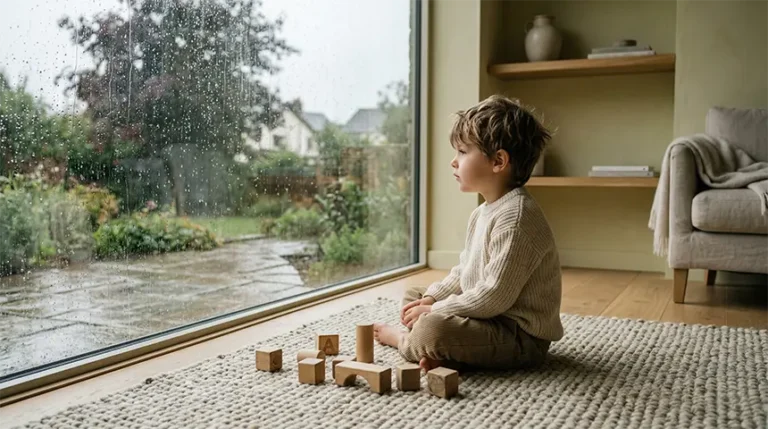
They learn to feel the texture of wooden blocks, the weight of a physical book, and the intricate details of their own backyard. An analog childhood provides the foundational building blocks for a resilient, highly focused mind. Without the constant interruption of digital alerts, children can finally engage in deep, uninterrupted play.
This state of flow is crucial for developing robust problem-solving skills and emotional intelligence. When you commit to limiting screen time, you will inevitably witness a remarkable transformation in how your child interacts with the physical world around them. They move from being passive consumers of digital content to active creators of their own beautiful, messy reality.
The benefits of this analog shift extend far beyond simple playtime into the core of their psychological well-being. Here is what happens when you prioritize physical experiences by actively prioritizing physical engagement in your home:
- Enhanced Tactile Learning: Children process information far more effectively when they can touch, manipulate, and physically interact with their learning materials.
- Deepened Parent-Child Connection: Analog activities require eye contact, shared attention, and physical presence, fostering an incredibly secure emotional bond.
- Improved Emotional Regulation: Without the jarring, rapid stimulation of fast-paced videos, a child’s nervous system can remain in a calm, balanced, and receptive state.
- Development of True Imagination: Physical toys do not dictate the story; the child must invent the narrative, stretching their creative faculties to new heights.
To fully understand the depth of this transformation, I highly recommend exploring our detailed guide on The Analog Anchor: Why a Screen-Free Childhood Matters More Than Ever. It provides incredible insight into why tactile learning is absolutely irreplaceable for growing minds. Furthermore, introducing beautifully illustrated, physical reading materials is a cornerstone of this process. You can learn more about this specific transition in our article, Why Paper Matters: The Psychological Benefits of Physical Books in a Digital Age.

The Step-by-Step Digital Detox Blueprint for Overwhelmed Families
We know that the idea of limiting screen time can feel incredibly daunting, especially if devices have become deeply woven into your daily routine. The absolute worst approach you can take is to suddenly hide all the tablets and declare a cold-turkey ban. This sudden deprivation will only lead to massive power struggles, tears, and a highly stressed household. Instead, this transition must be approached as a gentle, gradual fading process.
We want to slowly build their tolerance for analog play while gently decreasing their reliance on digital entertainment. A successful digital detox is built on a foundation of empathy, preparation, and incredibly consistent boundaries. You are not punishing your child; you are guiding them toward a healthier, more balanced rhythm. When you reframe limiting screen time as a positive lifestyle shift, your energy changes, and your child will absolutely feel that confident, calm leadership.
The goal is to make the transition feel natural, almost inevitable, rather than forced. If you are feeling overwhelmed by where to begin, take a deep breath and start small. You do not need to overhaul your entire life in a single weekend. By following a structured, compassionate approach, you can successfully navigate this transition and confidently begin this essential shift.
Here is our proven, step-by-step blueprint for effectively limiting screen time without the tears. These gentle strategies will help you reclaim your home’s peaceful rhythm:
- Conduct a Gentle Digital Audit: For three days, simply track how much time is being spent on screens without making any changes. This gives you a clear baseline and highlights the specific times of day when devices are used as a crutch.
- Establish Immediate Screen-Free Zones: Choose specific areas of the house where devices are strictly prohibited, such as the dining table and the bedrooms. This creates clear physical boundaries that are much easier for a child to understand and respect.
- Implement the “Delay, Don’t Deny” Tactic: When your child asks for a show, do not say a flat no. Instead, enthusiastically say, “Yes, absolutely! As soon as we finish building this block tower.” This gently stretches their tolerance for waiting while still honoring their request.
- Create a Predictable Daily Rhythm: Children crave predictability and structure. Replace the chaotic, ad-hoc screen usage with a set, predictable time, such as thirty minutes after afternoon snacks.
- Over-Prepare the Analog Alternatives: Before you ask them to turn off the television, ensure there is a highly inviting, beautifully set up analog activity already waiting for them. A visually appealing invitation to play drastically reduces the transition friction.
It is completely normal to experience pushback during the first few days of limiting screen time. Your child’s brain is adjusting to a new, slower pace of dopamine release, and they will likely complain of intense boredom. Lean into this boredom. Empathize with their frustration, but hold the boundary with unshakeable, loving warmth.
It is precisely within that empty space of boredom that their true creativity will finally spark back to life. As you stay consistent with this new boundary, the daily complaints will rapidly diminish. You will begin to notice your child lingering longer at the craft table, pulling books off the shelf independently, and engaging in deep, imaginative scenarios. This is the profound reward of a digital detox.
Curating a Tactile Sanctuary: Replacing Screens with Engaging Alternatives

When you are actively limiting screen time, your physical home environment must do the heavy lifting for you. You cannot simply take away the tablet and leave a child in a sterile room; nature abhors a vacuum. By strategically placing high-quality, open-ended toys within their direct line of sight, you invite them into independent, focused play. This makes the digital detox feel like an exciting discovery rather than a strict deprivation.
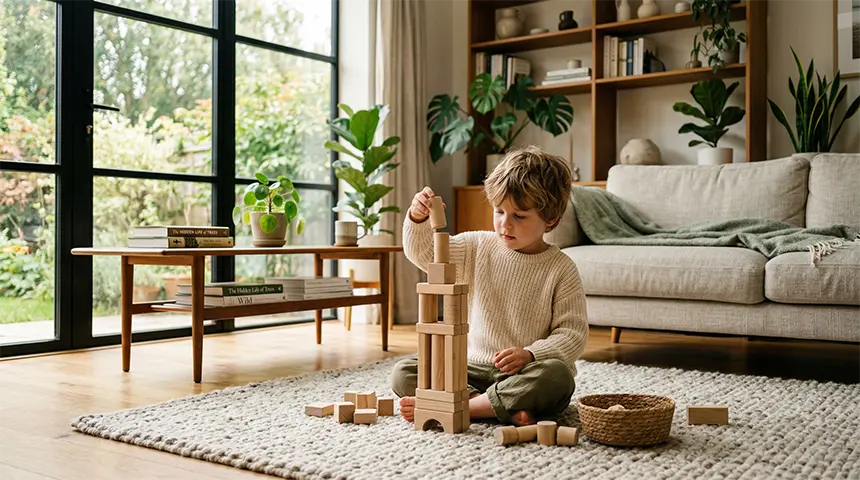
We highly recommend curating small, intentionally designed play stations around your main living areas. A low basket filled with wooden blocks in the living room, or a dedicated art caddy on the kitchen table, serves as a visual cue that there are wonderful things to do. When you make the analog options more visually appealing and accessible than the hidden tablet, limiting screen time becomes virtually effortless. The child naturally gravitates toward the tangible, beautiful materials you have provided.
Designing a space that fosters peace and focus benefits the entire household, not just the children. In fact, many of the principles used in creating a calm analog environment for kids are strikingly similar to how we design spaces for sensitive pets. You can read more about curating a universally calming environment in our guide to The Allergy-Friendly Sanctuary: Managing Pet Dander with Premium Air Care and Intentional Cleaning, which emphasizes intentional, safe home layouts. Building a tactile sanctuary requires intentionality, but the behavioral payoffs are truly immense.
Whether you are managing energetic toddlers or a bustling multi-pet household, your physical space completely shapes your daily reality. By reducing visual clutter and prioritizing physical engagement, limiting screen time naturally becomes the easiest option. A beautifully organized play corner practically begs a child to sit down, slow their mind, and create something entirely new.
Managing Sibling Dynamics During the Transition
Navigating the complex waters of a digital detox becomes exponentially more challenging when you are managing a household with multiple children. When you begin limiting screen time in a multi-child household, you will quickly discover that each child reacts to the new boundaries in wildly different, often conflicting ways. An older sibling might feel deeply resentful that their digital privileges are being curtailed to support the broader family goal, while a younger sibling might loudly struggle with the sudden absence of their favorite animated characters. It is completely normal for sibling friction to spike sharply during the initial phases of this transition, as they are both simultaneously processing their individual digital hangovers.
However, limiting screen time also presents a profound, genuinely beautiful opportunity to rebuild their sibling connection from the ground up. Without the isolating, silent bubble of a tablet or a television screen, children are forced to look at one another, negotiate their physical play spaces, and collaborate on entirely new analog adventures. The key to managing this dynamic is to actively foster cooperative play without forcing it to happen artificially. Instead of demanding they play together, set up a highly engaging, open-ended activity in a shared neutral space, like the living room rug. When both children are drawn to the same tactile project, whether it is building a massive indoor block fort or sorting through a sensory bin, the shared focus naturally bridges their age gap. The friction slowly, almost imperceptibly, dissolves into genuine, collaborative creativity.

One of the most effective, calming ways to unite siblings during this analog shift is through the shared magic of reading out loud. To help you navigate these shared moments smoothly, I highly encourage you to read our comprehensive guide on 7 Proven Sibling Storytime Strategies for Every Modern Parent. It offers beautiful, practical advice on how to engage children of varying ages simultaneously. By implementing these gentle strategies, limiting screen time becomes an incredible avenue for deep, shared family connection rather than a persistent source of sibling rivalry.
Here are a few gentle, practical ways to support your children when the transition away from screens causes inevitable sibling friction:
- Validate Individual Frustrations: Acknowledge that it is perfectly okay for the older child to feel annoyed, while offering a separate, quiet space for the younger child to decompress. Validation removes the emotional charge from the argument.
- Create Age-Appropriate Escapes: Ensure the older child has a dedicated “big kid zone” where their intricate Lego builds or chapter books are safe from the destructive hands of a curious toddler.
- Celebrate Collaborative Milestones: Whenever you witness them playing together peacefully without the aid of a digital device, offer highly specific, warm praise. “I love how beautifully you two figured out how to share those wooden blocks.”
Empowering Boundaries: Using Technology to Limit Technology
One of the most emotionally exhausting aspects of limiting screen time is the constant, draining role of the enforcer. When you are the sole gatekeeper of the devices, every single request for a tablet turns into a high-stakes, exhausting negotiation. You find yourself constantly watching the clock, arguing over “just five more minutes,” and absorbing the full brunt of their explosive frustration when the time is finally up. This constant, daily friction completely undermines the peaceful, intentional home environment we are striving so hard to create.
The most liberating strategy you can possibly implement is to shift the heavy burden of enforcement away from yourself and directly onto the technology itself. By utilizing premium digital well-being applications, you can effectively automate the boundaries. When an app automatically locks a device after the agreed-upon thirty minutes, the device simply turns off. The boundary becomes an objective, immovable fact of the technology rather than an arbitrary, flexible rule imposed by the parent. This subtle psychological shift is incredibly powerful; it completely removes you from the role of the “bad guy” and drastically reduces the behavioral meltdowns.
When limiting screen time is managed by an invisible, automated system, your children stop arguing with you and quickly learn to accept the digital boundary. This automation allows you to step back into the role of a supportive, empathetic guide rather than a strict disciplinarian. You can offer a warm hug and validate their disappointment when the screen goes dark, knowing securely that the boundary is held firmly by the software.
To establish these healthy digital perimeters without stress, we must choose our tools wisely. Here are the key features to look for when selecting a premium parental control application to support your family’s digital detox:
- Automated Daily Limits: The vital ability to set a strict, non-negotiable cap on total daily usage, ensuring that limiting screen time happens consistently, even on your busiest, most chaotic days.
- Customizable Content Filtering: Robust, dynamic filters that actively block inappropriate content and aggressive, fast-paced applications that cause intense dopamine spikes, protecting their developing neural pathways.
- Scheduled Downtime: Features that automatically disable the device during crucial family connection moments, such as the dinner hour or the crucial sixty minutes leading up to bedtime, fostering a peaceful evening rhythm.
- Detailed Activity Insights: Comprehensive, weekly reports that show you exactly where their digital time is being spent, allowing you to make informed, highly empathetic decisions about their digital diet.
- Remote Device Locking: The ultimate power to instantly pause the internet across all household devices with a single tap, bringing the family’s attention back to the physical world without ever needing to raise your voice.
By investing in these premium, digital well-being tools, limiting screen time transforms from a daily battle of wills into a seamless, automated background process. It gives you the ultimate peace of mind, knowing that your children are continuously protected from extreme digital overload even when you cannot directly supervise their every click.
Grace Over Perfection: Sustaining the Screen-Free Rhythm
As you bravely embark on this journey to reclaim your family’s analog rhythm, it is absolutely essential to approach the entire process with immense self-compassion. The ultimate goal of limiting screen time is never, ever to achieve a state of absolute, rigid aesthetic perfection. There will be deeply challenging days when a family member falls ill, when the weather is unbearable and keeps everyone trapped indoors, or when you are simply running on empty. On those incredibly hard days, utilizing a long, beautifully animated movie or an interactive educational app is not a failure of your parenting; it is a necessary, gentle survival tool.
The true, lasting measure of success is not a completely zero-screen household, but rather a deeply intentional household. When you bravely commit to limiting screen time, you are simply shifting the default setting of your home environment. The beautiful default becomes reaching for a physical book, stepping out into the garden, or engaging in wild, imaginative play, rather than automatically powering on a digital device the moment boredom strikes. When digital media is consumed, it is chosen consciously, enjoyed fully, and then put away without a massive emotional struggle.
Remember that limiting screen time is a long marathon, not a quick sprint. Your child’s developing brain is highly, wonderfully adaptable, and with your warm, consistent leadership, they will rapidly rediscover the absolute joy of the physical world. You will soon begin to hear the beautiful, quiet hum of independent play replacing the jarring, repetitive noise of digital cartoons. You will notice their attention span slowly stretching, their emotional resilience strengthening, and their deep, authentic connection to you blossoming in ways you never thought possible.
You are actively giving them the ultimate, life-altering gift: the quiet white space required to figure out exactly who they are when a glowing screen is not dictating their thoughts. Stay the course, hold the boundaries with profound love, and watch closely as your home transforms into a true, lasting sanctuary of calm, tactile joy. This process is undeniably hard work, but the vibrant, highly creative, deeply connected childhood you are carefully cultivating on the other side of the screen is worth every single ounce of your effort.