Digital Products Available Globally | Physical Products currently Shipping to USA, Canada, UK, EU, AU & NZ. ✨ Introductory SALE across all products!


The Allergy-Friendly Sanctuary: Managing Pet Dander with Premium Air Care and Intentional Cleaning
Welcome to the beautiful, unpredictable reality of living with animals. As modern pet parents, we pour our hearts into creating homes that are aesthetically pleasing, incredibly comfortable, and welcoming to our four-legged companions. But alongside the joy, the muddy paw prints, and the endless affection, there is often a silent, invisible struggle floating through our sunlit living rooms.
Table of Contents
For many families, the dream of a beautifully designed, pet-friendly home clashes directly with the harsh reality of indoor allergies. We want to bury our faces in our dog’s fur and let our cats curl up on our premium linen sofas. Yet, the persistent sneezing, the itchy eyes, and the lingering respiratory discomfort can quickly turn our sanctuaries into spaces of quiet frustration.
This is the unspoken challenge of modern caregiving, where we refuse to compromise on our pets and our ability to breathe easily. Managing pet dander beautifully is the foundation of resolving this tension. By understanding the environment, we can reclaim our spaces without sacrificing our curated lifestyle.
Creating a truly breathable home does not mean banishing your pets from your favorite spaces or living in a sterile, clinical environment. It means stepping into a more intentional, deeply proactive approach to your daily routines. Managing pet dander is entirely possible when you combine strategic air care, beautiful design choices, and a refined cleaning rhythm.
You do not have to choose between a beautifully styled home and a healthy respiratory system. By understanding the root causes of indoor allergens and implementing a few premium, highly effective systems, you can reclaim your space. The goal is to build a home where both your aesthetic sensibilities and your family’s well-being can thrive simultaneously.
The 3 Core Tenets of an Allergy-Friendly Sanctuary
Before diving into the technicalities of air filtration and grooming tools, we must first establish the foundational philosophy of a breathable home. This mindset shift is what transforms endless, frustrating chores into a seamless, elevated lifestyle. It is about working smarter, not harder, to protect the people and animals you love.
- Refusal to Compromise: You should never have to choose between the profound emotional benefits of pet ownership and your own physical health.
- Proactive Environmental Control: We must shift away from exhausting, reactive cleaning binges and move toward continuous, automated air management systems.
- Intentional Design Choices: Recognizing that your decor, furniture, and textile choices directly dictate your indoor air quality is the key to lasting relief.
The Invisible Layer: Understanding What Pet Dander Actually Is
Before we can curate a truly allergy-friendly sanctuary, we have to understand exactly what we are up against. When most people think about pet allergies, they immediately blame the fur covering their rugs. They vacuum relentlessly, brush their dogs until their arms ache, and wonder why their eyes are still watering.
But fur is not the actual enemy here; it is merely the visual vehicle for the true culprit. The real trigger is microscopic, highly pervasive, and entirely invisible to the naked eye. Managing pet dander requires us to look past the visible shedding and address the biological reality of our pets’ skin.
To effectively neutralize these allergens, we need to examine their unique properties. Understanding how these particles behave in your home dictates exactly what tools you need to capture them.
The 3 Hidden Characteristics of Pet Dander
- It is Microscopic and Buoyant: Because these skin flakes are incredibly tiny and lightweight, they remain suspended in the natural air currents of your home for hours.
- It is Protein-Based, Not Just Dust: The actual allergic reaction is triggered by specific proteins from your pet’s saliva, urine, and sebaceous glands, not just dry skin.
- It is Highly Adhesive: These protein-laden particles are inherently sticky, allowing them to cling stubbornly to your premium linen sofas, velvet pillows, and woven rugs.
When your dog licks their coat, or your cat meticulously grooms themselves, they deposit these allergy-triggering proteins directly onto their fur. As the skin naturally renews itself and flakes off, these sticky particles are released right back into your environment. This is why simply sweeping up visible hair will never truly solve an allergy problem.
Effectively managing pet dander means intercepting these invisible particles before they can settle into your soft furnishings or enter your respiratory tract. It requires systems that constantly filter the air, trapping these microscopic invaders while you go about your day. Managing pet dander is an ongoing, atmospheric process rather than a once-a-week chore.
The Myth of the “Hypoallergenic” Pet: Why Every Modern Home Requires Intentional Air Care
In the quest for a symptom-free life, many hopeful pet parents seek out specific breeds, trusting the alluring promise of the “hypoallergenic” dog or cat. We see beautifully groomed Poodles, elegant Afghan Hounds, and striking Sphynx cats marketed as the ultimate solution for allergy sufferers. The belief is that if an animal does not shed heavily, the allergy problem is instantly solved.
Unfortunately, this is one of the most pervasive and misleading myths in the pet industry today. The harsh reality is that a truly, one-hundred-percent hypoallergenic dog or cat simply does not exist. Because allergies are triggered by the proteins found in skin flakes and saliva, every single warm-blooded pet will inevitably produce allergens.
Managing pet dander is a universal requirement for any household with animals, regardless of the breed’s shedding profile. A low-shedding dog may leave less visible hair on your velvet sofa, which certainly makes surface cleaning much easier. However, that same dog is still continually shedding microscopic skin cells into the ambient air of your living room.
The 3 Realities of Low-Shedding Breeds
- Dander is Skin, Not Hair: No matter the length or texture of the coat, every warm-blooded animal sheds microscopic skin cells continuously.
- The “Concentrated Cloud” Effect: Non-shedding coats trap dander against the skin, releasing a massive, concentrated cloud of allergens the moment they are finally brushed.
- The Saliva Factor: All dogs and cats groom themselves daily, spreading the allergy-causing proteins across their bodies regardless of their specific coat type.
This is why relying solely on a breed’s reputation is a fundamentally flawed strategy for protecting your family’s health. You cannot bio-hack your way out of indoor air pollution simply by choosing a specific type of dog. Instead, you must focus entirely on controlling the environment they live in.
Creating a healthy home requires us to look at the broader picture of our indoor air quality. Just as we would address off-gassing furniture or outdoor pollutants seeping in, we must address the biological reality of our pets. For a deeper understanding of how various elements impact your living space, explore our guide on The Invisible Threats: A Room-by-Room Guide to Hidden Pet Toxins.
Understanding that no pet is entirely allergen-free is actually incredibly liberating for modern caregivers. It frees you from the frustration of wondering why your “hypoallergenic” puppy is still making you sneeze. It allows you to stop blaming the animal and start optimizing your home’s infrastructure.
Managing pet dander becomes a routine part of your household maintenance, much like watering your plants or wiping down your premium countertops. It shifts the burden away from the pet and places the power firmly back into your hands. With the right knowledge and the right premium tools, you can successfully neutralize these invisible triggers every single day.
You can absolutely share your beautifully curated life with the dog or cat of your dreams, regardless of their specific breed. It simply requires a commitment to intentional air care and a refusal to settle for subpar indoor air quality. Managing pet dander is not a punishment for loving animals; it is simply the modern standard of care for a healthy, vibrant home.
Designing Your Home’s Airflow: The Science of HEPA Filtration
When we think about interior design, we usually focus on lighting, color palettes, and the tactile feel of our furnishings. But the most vital element of a truly luxurious space is completely invisible to the eye. Designing your home’s airflow is the ultimate secret to managing pet dander effectively and reclaiming your sanctuary.
Without a deliberate strategy for air circulation, your beautifully curated home simply becomes a stagnant trap for biological allergens. The microscopic skin flakes your pets naturally shed need a clear exit strategy, or they will continuously settle on your pristine surfaces. This is where the science of True HEPA filtration transforms from a medical necessity into a premium lifestyle upgrade.
According to the comprehensive guidelines established by the Environmental Protection Agency (EPA) on indoor air quality, effectively reducing airborne particulates requires a filter capable of capturing incredibly small pollutants. A True HEPA filter is specifically designed to trap 99.97% of particles that are 0.3 microns in size or larger. Managing pet dander becomes infinitely easier when you allow a beautifully designed, high-performance machine to do the heavy lifting for you.
You cannot simply plug a purifier into a hidden corner and expect it to magically cleanse the entire house. The architecture of your airflow requires intentional placement and a deep understanding of how air actually moves through your specific rooms. The goal is to create continuous, invisible currents that sweep allergens away from your breathing zones.
Here are the 5 non-negotiable rules for strategic air purifier placement in a pet home:
- Liberate the Airflow Path: Never push your air purifier flush against a wall or tuck it tightly between heavy pieces of vintage furniture. Managing pet dander requires the machine to pull air freely from all directions, so it needs at least two feet of clearance on every side to function optimally.
- Calculate the CADR for Your Space: The Clean Air Delivery Rate (CADR) must mathematically match the exact square footage of your room to be genuinely effective. A stunning, minimalist purifier is completely useless if it is undersized for your expansive, open-concept living area.
- Prioritize Your Sleep Sanctuaries: Your bedroom is the most critical breathing zone in your home, as your body does its deepest restorative work while you sleep. Place your highest-quality purifier here, ensuring you are managing pet dander continuously throughout the night for uninterrupted rest.
- Intercept the Highest Traffic Zones: Position secondary units directly in the rooms where your dogs or cats spend the vast majority of their time lounging. By capturing the dander at its primary source, you prevent it from migrating through the HVAC system into the rest of your home.
- Commit to Continuous Operation: Air purifiers are not a reactive measure to be turned on only when you start sneezing or when guests arrive. True environmental control means running them continuously on an auto-sensor setting, allowing them to quietly and efficiently filter the air 24/7.

The Grooming Intervention: Stopping Dander Before It Becomes Airborne
Filtration is your invisible shield, but it is only half of the equation when creating a beautifully breathable sanctuary. The most proactive method of managing pet dander is intercepting it directly at the source. This requires shifting your perspective on grooming from a mundane chore into a deeply intentional, preventative ritual.
When we allow loose hair and dead skin cells to accumulate on our pets, we are essentially allowing them to become walking allergen dispensers. Every time they shake, scratch, or simply walk across your vintage Persian rug, they are releasing a massive cloud of invisible particulates. Managing pet dander efficiently means stopping that release before it ever has the chance to become airborne and enter your respiratory system.
Many well-meaning pet parents mistakenly believe that frequent, intense bathing is the absolute solution to an indoor allergy problem. However, over-bathing strips your dog or cat’s skin of its natural, essential oils, leading to severe dryness and irritation. Dry, irritated skin actually flakes more rapidly, which aggressively and exponentially increases the amount of dander released into your environment.
Instead of relying on harsh shampoos, we must look at coat health through a much more holistic, nutritional lens. The true foundation of a resilient, low-dander coat is built from the inside out through premium, moisture-rich whole foods. You can explore our highly comprehensive approach to nourishing a healthy skin barrier in The Wholesome Bowl: A Boutique Guide to a Whole Food Puppy Diet.
When their diet is optimized and their skin is hydrated, the actual physical grooming becomes a gentle, bonding experience rather than a desperate attempt to scrub away allergens. You are no longer fighting their biology; you are simply maintaining a healthy, balanced system that works in harmony with your home. Managing pet dander requires consistency, utilizing the right premium tools, and establishing a rhythm that seamlessly fits into your busy modern lifestyle.
Here is the 3-step weekly coat maintenance ritual for allergy sufferers:
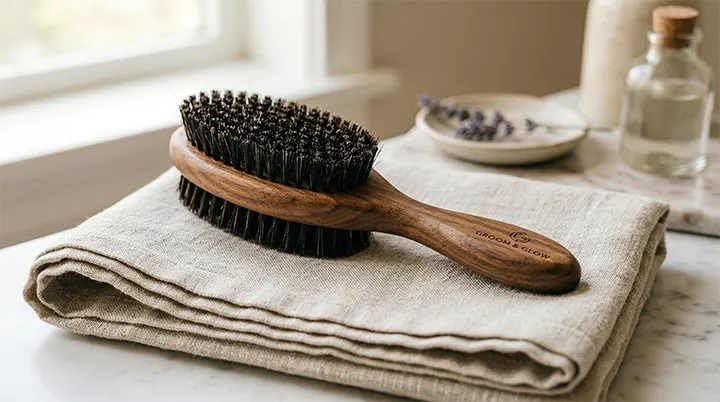
- The Intentional Outdoor Brushing Session: Take your dog outside at least twice a week for a dedicated, slow-paced brushing session using a high-quality deshedding tool or a natural boar bristle brush. By moving this ritual outdoors, you are ensuring that the massive amounts of loosened skin cells and hair blow away in the breeze, rather than settling onto your living room floor.
- The Dander-Neutralizing Wipe Down: On the days you do not physically brush your pet, use a premium, hypoallergenic pet wipe or a damp microfiber cloth to gently wipe down their entire coat. This quick, daily habit captures the surface-level dander and saliva proteins before they have the chance to dry, flake, and float into your beautifully curated home.
- The Nightly Paw and Underbelly Cleanse: Pets track an enormous amount of outdoor allergens, pollen, and dust directly into your home on their paws and bellies after a walk. Implementing a warm, soothing wipe-down at the front door prevents these environmental triggers from compounding with the existing pet dander inside your sanctuary.
When you faithfully implement this grooming intervention, the reduction in airborne dust and allergens is almost immediately noticeable. You will begin to see less residue settling on your dark furniture, fewer dust bunnies hiding in the corners, and a profound difference in the clarity of the air you breathe. Managing pet dander at the source drastically reduces the heavy workload placed on your air purifiers and your vacuum cleaner.
This daily ritual also provides a quiet, dedicated moment of connection between you and your animal away from screens and distractions. It transforms a functional necessity into a soothing daily touchpoint, reinforcing your emotional bond while simultaneously protecting your physical health. It is the perfect embodiment of intentional caregiving, where every single action serves multiple beautiful purposes.
We must remember that our beloved pets cannot control the allergens they naturally produce, but we have complete control over how we choose to manage them. By investing in their coat health and committing to a preventative brushing routine, we are honoring their physical needs while fiercely protecting our own well-being. Managing pet dander is simply a natural extension of the deep love, respect, and responsibility we hold for them.
As your pet’s skin health visibly improves and your brushing rhythm becomes second nature, the allergy symptoms that once plagued your home will begin to fade into the background. You are actively designing a healthier ecosystem for your family, step by step, and breath by breath. The heavy, stagnant air is finally replaced with a crisp, clean environment that perfectly complements your premium aesthetic.
Now that we have successfully addressed the airflow and intercepted the dander at its source, we must look at the physical surfaces within our homes. The textiles we choose and the specific systems we use to clean them are the final, crucial barriers in our overall defense strategy. The next vital step in managing pet dander is completely rethinking our soft furnishings and upgrading our household routines.

Rethinking Soft Furnishings: Rugs, Sofas, and the Textiles We Choose
When we design our living spaces, we naturally gravitate toward warmth and texture. We layer plush velvet pillows, unroll deep-pile Moroccan rugs, and drape heavy, comforting throws across the arms of our sofas. However, these beautifully tactile choices can quickly become the greatest adversaries in managing pet dander effectively. Every soft, porous surface in your home acts like a giant, passive sponge, relentlessly absorbing the microscopic skin flakes and proteins your animals shed.
If you are constantly battling allergy symptoms despite running a premium air purifier, your textiles are likely the hidden culprit. Rethinking your soft furnishings does not mean stripping your sanctuary of all comfort or transitioning to an austere, sterile aesthetic. It simply means making highly intentional, intelligent fabric choices that actively repel allergens rather than trapping them indefinitely. Managing pet dander becomes a seamless process when you build your room around tight-weave, easily washable materials.
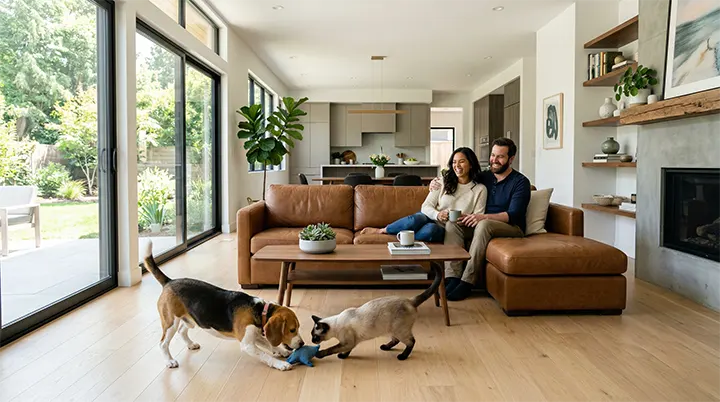
Consider swapping out your heavy, wall-to-wall carpeting for beautifully finished hard floors layered with machine-washable area rugs. Swap your deep velvet sofa for top-grain leather or tightly woven performance linen, both of which allow dander to sit on the surface where it can be easily wiped away. This intentional approach is especially critical when designing spaces for your children, whose developing respiratory and immune systems require pristine air quality.
Creating a designated, allergen-free zone for your little ones is just as important as the educational materials you provide them. When styling these developmental spaces, you want to ensure the environment supports both their cognitive growth and their physical health. For a deeper dive into creating these beautiful, functional spaces, explore our guide on The “Forward-Facing” Bookshelf: Styling a Reading Corner Kids Actually Use.
By choosing textiles that are inherently resistant to trapping airborne particulates, you are fundamentally changing the physics of your home. The allergens have nowhere to hide, remaining in the open air just long enough for your HEPA filtration system to capture them. Managing pet dander is ultimately about designing an environment that actively works with you, rather than against you.
The Modern Pet Parent’s Cleaning Arsenal: Vacuums vs. Pet Dander
Even with the most strategic airflow and the most intentional fabric choices, gravity will eventually pull some allergens down to your floors and furniture. This is where your physical cleaning routine must step in to close the gap. However, the tools you use to execute this routine are what separate a frustrating, endless chore from a highly effective strategy for managing pet dander.
Many standard household vacuums are woefully unequipped to handle the microscopic reality of animal allergens. They may successfully pick up the visible clumps of fur, but they simultaneously exhaust the invisible, allergy-triggering skin flakes right back into your breathing zone. If your vacuum smells like a wet dog while you are using it, it is actively failing you.
Upgrading your cleaning arsenal is a non-negotiable investment in your family’s daily comfort and long-term health. You need a machine specifically engineered to trap and lock away the smallest, most pervasive particulates. Managing pet dander requires a surgical approach to vacuuming, where nothing that enters the machine is ever allowed to escape back into your beautifully curated sanctuary.
When selecting the perfect tool for your allergy-friendly home, look beyond the standard marketing claims and focus on the internal engineering. Here are the 4 essential features your pet-specific vacuum must actually have:
- A Completely Sealed HEPA System: It is not enough to simply have a HEPA filter attached to the exhaust port of the vacuum. The entire internal system must be fully sealed so that unfiltered air cannot leak out through the seams and joints while you are managing pet dander on your rugs.
- Tangle-Free, Active Brush Rolls: A brush roll constantly choked with long pet hair loses its ability to agitate the carpet fibers and lift the deeply embedded dander. Look for premium models featuring anti-tangle technology, ensuring the machine maintains maximum suction and efficiency during every single cleaning session.
- Motorized Pet Tools for Upholstery: The microscopic proteins from your pet’s skin and saliva cling stubbornly to the fabrics of your sofa, your bed, and your decorative pillows. A standard suction attachment will not break that bond; you need a dedicated, motorized upholstery tool to actively scrub and lift the allergens away.
- A Hygienic, Dust-Free Emptying Mechanism: The most dangerous moment in managing pet dander is when you finally empty the vacuum’s dustbin into the trash. Choose a model with a hygienic ejection system that pushes the dirt out away from your face, preventing a massive cloud of allergens from billowing back into your pristine kitchen.
Establishing a Sustainable, Low-Stress Dander-Defense Routine
With the right premium tools securely in your arsenal, the final step is shifting your mindset away from exhaustive, weekend-long deep cleans. True environmental control is built on the foundation of small, sustainable daily rhythms. Managing pet dander is a marathon, not a sprint, and your routine must be designed to integrate seamlessly into your busy, modern lifestyle.
When you allow allergens to compound over the course of a week, the air quality in your home degrades significantly, triggering severe immune responses. By the time you finally drag the heavy vacuum out on Saturday morning, you are already suffering. Establishing a low-stress, highly consistent routine prevents this compounding effect entirely, keeping the allergen load constantly below your family’s unique trigger threshold.
This consistency is absolutely vital if you share your home with more than one animal. The sheer volume of skin flakes and saliva proteins multiplies exponentially with every additional dog or cat you welcome into your sanctuary. If you are navigating the beautiful chaos of a diverse animal family, you can find highly practical strategies in The Ultimate Guide to Balancing Cats and Dogs in a Modern Home.
A sustainable dander-defense routine should never feel overwhelming or require hours of your precious free time. It is simply about spending five intentional minutes each day maintaining the beautiful baseline you have established. Run the motorized tool over the sofa where your dog slept last night, quickly empty the air purifier pre-filters, and let the automated systems handle the rest.
Managing pet dander beautifully is the ultimate expression of modern, mindful caregiving. It is a proactive declaration that your home will remain a place of deep rest, stunning aesthetics, and vibrant health. You are meticulously curating an environment where the love you have for your pets never has to compromise the physical well-being of the people who live there.
The beautiful chaos of living with animals will always bring a bit of mess into our carefully designed spaces, and that is perfectly okay. The goal is not perfection; the goal is simply a home that feels as incredibly good as it looks. By implementing these premium air care strategies, you are finally free to take a deep, clear breath and simply enjoy the wonderful life you have built together.