Digital Products Available Globally | Physical Products currently Shipping to USA, Canada, UK, EU, AU & NZ. ✨ Introductory SALE across all products!

The Ultimate Guide to Balancing Cats and Dogs in a Modern Home
Part 1: The Foundation of Feline and Canine Harmony
The dream of a beautifully balanced, multi-pet household is a wonderful aspiration for any modern family. We often picture our pets curled up together by the fireplace, sharing quiet afternoons in perfect, silent companionship.
However, achieving this boutique, idyllic aesthetic requires a deep understanding of animal psychology and behavior. The reality is that perfectly introducing dogs and cats is an art form that demands patience, strategy, and absolute consistency.
Table of Contents
When you rush this delicate process, you risk creating an environment of chronic stress for both of your beloved companions. By taking a thoughtful, phased approach to introducing dogs and cats, you lay the groundwork for a lifetime of mutual respect.
The Psychology Behind Introducing Dogs and Cats
To truly understand the dynamic in your home, you must first look at the world through the eyes of your pets. Dogs are naturally predatory by evolutionary design, often hardwired to chase small, fast-moving objects that cross their path.
Conversely, cats view themselves as both majestic predators and potential prey, making them hyper-vigilant to sudden changes in their territory. When introducing dogs and cats, you are essentially asking two vastly different species with opposing survival instincts to share a dining room.
This is why a successful strategy relies entirely on suppressing the dog’s prey drive while simultaneously boosting the cat’s confidence. The secret to seamlessly introducing dogs and cats is ensuring that neither animal ever feels trapped, threatened, or overwhelmed during the transition.
Scent Before Sight: The Golden Rule
The most common mistake new pet parents make is allowing a face-to-face meeting on the very first day. The absolute golden rule of introducing dogs and cats is that they must smell each other long before they ever see each other.
Animals process the world primarily through their olfactory senses, building complex profiles of other creatures entirely through scent. Start the process of introducing dogs and cats by keeping them completely separated by a sturdy, closed door for at least three days.
Feed them their meals on opposite sides of this door to create a positive association with the other animal’s distinct scent. According to the animal behavior experts at the Cornell University College of Veterinary Medicine, tying the positive experience of eating to the presence of a new scent is crucial for long-term behavioral success.
The Art of the Scent Swap
Once your pets are comfortable eating near the door without growling or hissing, it is time to elevate your strategy. The next phase of successfully introducing dogs and cats involves actively swapping their bedding, blankets, and toys.
Take a clean towel, gently rub it over your dog, and place it directly next to your cat’s favorite sleeping spot. Do the exact same thing in reverse, bringing the cat’s unique scent directly into the dog’s personal sanctuary.

This passive method of introducing dogs and cats normalizes their presence in the home without triggering the adrenaline of a physical encounter. If either pet reacts negatively to the towel, simply move it slightly further away until they can tolerate it peacefully.
Preparing the Sanctuary Spaces
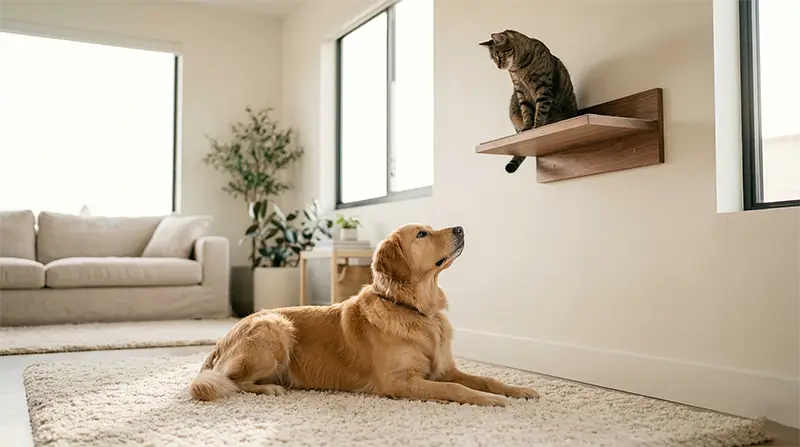
Before any visual contact happens, your home must be architecturally prepared to support a low-stress environment. When introducing dogs and cats, vertical space is your absolute best friend and the key to feline confidence.
Cats need high shelves, tall cat trees, or cleared mantels where they can observe the “intruder” safely out of reach. Ensuring these high spaces are completely safe is vital, so be sure to review our guide on the invisible threats of hidden pet toxins to guarantee no toxic plants or hazards are lurking on those top shelves.
On the floor level, your dog needs a designated crate or a securely gated pen where they can relax without being swatted at. This structured environmental control is what makes introducing dogs and cats a calm, predictable process rather than a chaotic free-for-all.
The Power of Positive Reinforcement
Throughout this entire separation phase, your attitude and energy will heavily influence the emotional state of your animals. When introducing dogs and cats, you must be armed with patience and an abundance of high-quality rewards to capture good behavior.
Every time your dog sniffs the cat’s scent towel and remains calm, they should be immediately and generously rewarded. To keep their focus entirely on you during these critical moments, utilize the strategies in our ultimate guide to high-value dog training treats.
The same applies to your feline friend; reward them with their absolute favorite delicacy whenever they calmly approach the dividing door. By heavily reinforcing these micro-interactions, introducing dogs and cats transforms from a stressful event into a highly rewarding game for both pets.
Managing the Family Dynamic
Balancing the needs of your pets also means balancing the energy of the humans living under the same roof. When introducing dogs and cats, children can often unwittingly escalate the tension with loud noises, sudden movements, or over-excitement.
It is vital to establish quiet hours in the home where the animals can process these new scents without ambient chaos. You can beautifully manage your household’s energy by utilizing our 7 proven sibling storytime strategies to keep children quietly engaged while the pets decompress.
This holistic approach ensures that introducing dogs and cats is a team effort that respects the emotional bandwidth of every single family member. Consistency across all humans in the house guarantees that the boundaries you set are never accidentally crossed.
Part 2: The Visual Bridge and Decoding Body Language
After several successful days of scent swapping, the ambient tension in your home should begin to settle into a quiet curiosity. This signifies that your strategic approach to introducing dogs and cats is working beautifully behind the scenes.
The next monumental step is moving from olfactory acceptance to visual tolerance without triggering an instinctual chase response. This delicate transition requires physical barriers, intense focus, and absolute control over the environment.
Rushing the visual phase is the fastest way to derail the entire process of safely introducing dogs and cats. Your goal is to manufacture a series of incredibly boring, highly rewarding visual encounters that normalize their shared existence.
Implementing the Baby Gate Strategy
The safest way to bridge the visual gap is by utilizing a sturdy, extra-tall baby gate or a specialized pet barrier. When introducing dogs and cats, this transparent wall allows them to observe one another without the threat of physical contact.
Begin by securing the dog on a leash on one side of the gate, offering them high-value treats for remaining in a seated or lying position. Allow the cat to roam freely on the opposite side of the barrier, entirely at their own discretion and pace.
If the cat chooses to approach the gate, shower both animals with quiet praise and premium rewards to reinforce the calm behavior. This controlled method of introducing dogs and cats ensures that neither pet feels cornered, allowing the feline to dictate the distance.
The Leash and the Living Room
Once both animals are completely indifferent to each other through the baby gate, you can move the interaction into a shared space. The absolute safest method for visually introducing dogs and cats in the same room is to keep the dog tethered to a heavy piece of furniture or firmly held on a short leash.
Never lock the cat in a carrier for this meeting, as this immediately triggers feelings of being trapped and defenseless. Instead, allow the cat complete freedom to enter the room, investigate from a high vantage point, and leave whenever they wish.

Tethering the dog eliminates the possibility of a sudden lunge, making the process of introducing dogs and cats infinitely safer. Continue to reward the dog heavily for looking away from the cat and making eye contact with you instead.
Decoding Canine Body Language
As the humans in the equation, it is our absolute responsibility to act as fluent translators for our pets during these initial meetings. When introducing dogs and cats, a dog’s body language will explicitly tell you whether they are feeling curious, playful, or predatory.
A relaxed dog will have a loose, wiggly body, soft eyes, and ears that are resting in their natural, neutral position. Conversely, a stiff body, an intense, unblinking stare, and a tightly closed mouth are massive red flags that the prey drive is activating.
If you observe this tense posturing while introducing dogs and cats, you must immediately and calmly increase the distance between them. Redirect the dog’s attention with a command or a treat, and do not attempt another visual session until they are completely relaxed.
Understanding Feline Signals
Equally important to the success of this transition is your ability to accurately read the subtle warning signs of feline distress. Cats are masters of stoicism, but when safely introducing dogs and cats, their tails and ears will broadcast their true emotional state.
A confident, comfortable cat will walk with a high, gently curved tail and ears that are pointing forward and relaxed. If the cat’s tail begins to thrash aggressively, or if their ears flatten backward against their skull, they are deeply uncomfortable.
The moment you see an arched back, puffed-up fur, or hear a low growl, the session for introducing dogs and cats must end instantly. Pushing a cat past these clear boundaries will only result in a loss of trust and a massive setback in your training timeline.
The Power of the “Leave It” Command
Before you ever bring a feline sibling into a canine household, your dog must have a rock-solid understanding of basic obedience. The most valuable tool in your arsenal when introducing dogs and cats is a flawless, heavily practiced “leave it” command.
This command acts as an emergency brake, instantly snapping the dog’s attention away from the cat and back to you. Practice this cue relentlessly with toys, dropped food, and high-distraction environments long before the cat ever enters the picture.
When you are actively introducing dogs and cats, using “leave it” prevents the dangerous hyper-fixation that precedes a chase. Reward compliance with this command as if your dog has just won the lottery, cementing its importance in their mind.
Keeping Sessions Short and Sweet
A fatal error made by many enthusiastic pet owners is forcing the animals to interact for extended, exhausting periods of time. The golden rule for physically introducing dogs and cats is to keep the sessions incredibly short, positive, and strictly supervised.
Five minutes of calm, indifferent co-existence is infinitely more valuable than an hour of tense, anxious staring. Always aim to end the session for introducing dogs and cats on a high note, separating them before either animal becomes fatigued or irritable.

By slowly building the duration of these sessions over several weeks, you create a robust foundation of mutual tolerance. This slow, steady accumulation of positive experiences is the ultimate secret to a harmonious, multi-pet boutique lifestyle.
Part 3: The Final Transition to Unsupervised Harmony
As we enter the final stages of this transition, the heavy lifting of boundary-setting should be largely behind you. The ultimate goal of successfully introducing dogs and cats is achieving a state of relaxed, completely unsupervised coexistence in your home.
This monumental shift does not happen overnight, but rather through a carefully monitored and gradual release of physical restrictions. It requires profound trust in the training foundation you have built over the past several weeks of introducing dogs and cats.
When you feel completely confident in their supervised interactions, you can begin dropping the dog’s leash and allowing them to trail it on the floor. This provides a safety net that you can easily step on if the prey drive unexpectedly resurfaces.
Navigating the “Chase Reflex” Relapse
Even with the most meticulous preparation, a sudden sprint by your feline friend might trigger an instinctual response from your dog. When actively introducing dogs and cats, you must anticipate that the “chase reflex” might momentarily override their prior training.
If your dog lunges or breaks their stay, do not shout or punish them, as this adds chaotic energy to an already tense situation. Instead, calmly step on the trailing leash, firmly issue your “leave it” command, and immediately redirect their focus back to you.
Consistency in these high-stakes moments is what permanently solidifies the rules of safely introducing dogs and cats in a shared environment. If you find your dog is struggling with impulse control, reviewing the traits of the 10 easiest dog breeds to train for a harmonious family home can help you adjust your expectations based on their specific genetic predispositions.
Solidifying Feline Safe Zones
As you allow more freedom, the permanent architectural layout of your home becomes the cat’s primary defense mechanism. The long-term success of introducing dogs and cats relies heavily on the cat knowing they have guaranteed escape routes in every single room.
Ensure that baby gates with small, cat-sized access doors remain permanently installed in areas like the laundry room or the hallway holding their litter box. A dog should never, under any circumstances, have access to the cat’s food bowls or their private bathroom space.

When a cat feels their core resources are fiercely protected, their ambient anxiety drops significantly, making the process of introducing dogs and cats much smoother. This environmental security allows them to confidently share the living room floor without feeling like they are constantly on edge.
The Final Milestone: Unsupervised Access
The decision to finally leave your pets alone together should be based entirely on empirical evidence of their boredom with one another. When introducing dogs and cats, the green light for unsupervised access is consistent, mutual indifference spanning several weeks.
If they can nap in the same room, eat near each other, and ignore sudden movements without any tension, they are ready for the next step. Begin by leaving them alone together for just five minutes while you step outside to check the mail or take out the trash.
Gradually increase these absences, just as you would when crate training a puppy, ensuring you always return to a calm, peaceful house. This slow accumulation of unsupervised time is the final puzzle piece in the complex journey of introducing dogs and cats.
Recognizing and Respecting Limits
It is crucial for pet parents to acknowledge that not every pairing will result in best friends who cuddle on the sofa. For some households, safely introducing dogs and cats simply results in a quiet, respectful truce where they simply ignore each other.
This is still a massive success and should be celebrated as a victory for your multi-pet household. Never force them to interact or sleep close together if they prefer to maintain a polite, comfortable distance.
By respecting their individual boundaries and emotional limits, you foster an environment of deep, enduring trust. The ultimate reward for your patience while introducing dogs and cats is a peaceful home where every family member feels entirely secure.
A Lifetime of Boutique Companionship
Blending the energetic world of a dog with the refined independence of a cat is a true masterclass in patience. The weeks spent carefully managing scents, barriers, and rewards will ultimately fade into the background of your daily routine.
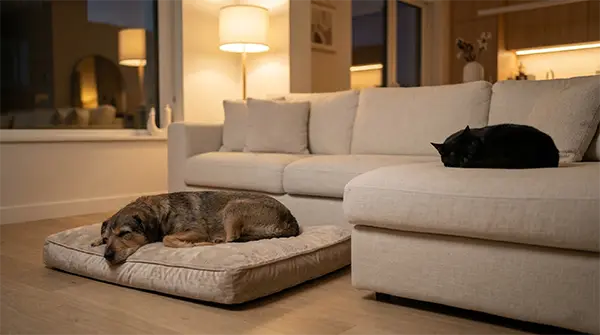
What remains is the beautiful, boutique aesthetic of a thriving, harmonious multi-pet family. You have laid the perfect foundation, and your home is now a true sanctuary for all of its residents.
About the Author: Zara Whisper
Zara Whisper is a dedicated pet lifestyle expert and children’s author catering to the premium markets of the United States, United Kingdom, Australia, and European Union. With a focus on harmonious living between pets and their families, Zara’s work for ZestoraLife Publishing aims to bridge the gap between boutique aesthetics and practical, high-value pet care.
© 2026 ZestoraLife Publishing | Mastered with the Introducing Dogs and Cats Guide