Digital Products Available Globally | Physical Products currently Shipping to USA, Canada, UK, EU, AU & NZ. ✨ Introductory SALE across all products!

Micro Boredom vs Creative Spark Teaching Your Child to Navigate Unstructured Time Without Tech
We all know the exact sound of a child who does not know how to navigate unstructured time. It usually begins with a heavy sigh, followed by a dramatic slump against the nearest piece of furniture. Then comes the inevitable, drawn-out declaration of absolute boredom.
As modern caregivers, our immediate instinct is often to fix this perceived problem. We want to rush in with a solution, a toy, or, quite frequently, a digital device. But learning to navigate unstructured time is actually one of the most critical skills a child can develop.
Quick Guide: navigate unstructured time
To successfully navigate unstructured time caregivers must resist the urge to provide constant digital entertainment. By allowing children to experience micro boredom implementing a Yes Space with tactile play and embracing quiet moments you help them build resilient neural pathways independent focus and lifelong creative joy without relying on screens.
Table of Contents
When we constantly intervene, we rob them of the chance to discover their own inner resources. The ability to gracefully navigate unstructured time is not a trait children are born with. It is a muscle that must be consistently exercised and strengthened over the years.
The Modern Epidemic of Constant Entertainment
In our current hyper-connected era, silence has become something we actively try to avoid. We fill every quiet moment in the car, at the grocery store, and in waiting rooms with colorful, fast-paced digital distractions. This constant stream of external stimulation makes it incredibly difficult for a child to navigate unstructured time independently.
They become entirely dependent on a screen to tell them how to feel and what to think about. When that screen is removed, the sudden silence can feel overwhelming and even physically uncomfortable for them. They have never been given the space to simply exist without an ongoing narrative being fed to them.

If you have ever attempted a sudden digital detox, you have likely witnessed the intense friction that occurs when the entertainment stops. This friction is entirely normal and is the first necessary step as they begin to navigate unstructured time.
Why the “In-Between” Moments Are Disappearing
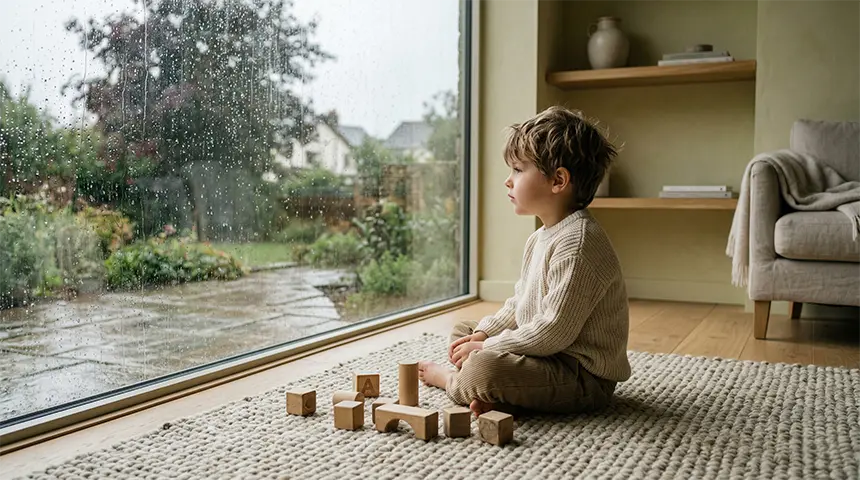
Think back to your own childhood and the long, quiet afternoons spent staring out of a rainy window. Those slow, seemingly empty moments were where the deepest levels of imaginative play were born. Today, those crucial moments of transition are rapidly disappearing from our family schedules.
We have meticulously scheduled every hour of their day with sports, classes, and highly structured playdates. When they finally do have a moment of peace, they no longer know how to navigate unstructured time because they have never had to practice it. Everything has always been planned out for them by a well-meaning adult.
To successfully teach a child to navigate unstructured time, we must first become comfortable with the silence ourselves. We have to resist the overwhelming urge to play the role of the cruise director in their daily lives.
- The Loss of Daydreaming: Without quiet gaps in the day, children lose the essential ability to simply sit with their own thoughts and daydream.
- The Dependency Loop: Continuous structured activities create a loop where a child always expects external direction for their next move.
- The Atrophy of Imagination: When entertainment is always provided, the brain’s creative centers do not have to work, leading to a weakened imagination over time.
Defining Micro-Boredom: The Gateway to Imagination
Micro-boredom is that brief, uncomfortable window of time right after an activity ends and before the next one begins. It is the restless fifteen minutes before dinner is fully prepared on a busy Tuesday evening. Learning how to comfortably navigate unstructured time during these small pockets is where the true magic happens.

If we immediately hand over a tablet to bypass this micro-boredom, we short-circuit their creative process. The child never experiences the necessary frustration required to invent a new game or pick up a forgotten book. They lose the opportunity to successfully navigate unstructured time and discover their own agency.
This is why leaning into the essential benefits of an analog childhood is so profoundly impactful for their developing minds. It forces them to look around their physical environment and engage with the real, tactile world.
When we allow them to sit in that temporary discomfort, their brains eventually seek out their own solutions. They will eventually pick up a wooden block, start drawing, or invent an imaginary scenario to entertain themselves. This self-directed play is the ultimate reward when a child learns to navigate unstructured time on their own terms.
- The Discomfort Phase: Acknowledge that the initial moments of boredom will be vocally unpleasant for both you and the child.
- The Searching Phase: Observe as they begin to wander aimlessly, looking for external input that you intentionally will not provide.
- The Engagement Phase: Celebrate the moment they finally settle into a self-directed activity, proving they can navigate unstructured time successfully.
- The Flow State: Watch as they enter deep, uninterrupted play where their imagination completely takes over the narrative.
The Neuroscience of Unstructured Time
From a neurological standpoint, constant digital entertainment keeps the brain in a perpetual state of high-alert consumption. The rapid dopamine hits provided by fast-paced games prevent the brain from fully resting. A child’s mind needs periods of under-stimulation to process information and build deep focus.
When a child is given the freedom to be bored, their brain begins to forge new, complex neural pathways. It shifts from passive consumption to active problem-solving, which is a cornerstone of advanced cognitive development. A brain that knows how to naturally manage open-ended time is a highly resilient and adaptable brain.

When there is no screen dictating the narrative, the child must rely on memory, spatial awareness, and creative thinking. This internal heavy lifting is precisely what builds a stronger, more capable mind over the long term.
How Boredom Builds Brain Connectivity and Cognitive Growth
Boredom acts as a powerful catalyst for neuroplasticity, forcing the brain to create its own internal stimulation. The quiet moments allow the right and left hemispheres of the brain to communicate more effectively. This cross-communication is vital for emotional regulation and complex problem solving.
We cannot artificially manufacture this kind of profound cognitive growth with educational apps or structured flashcards. It only blooms in the quiet, empty spaces where a child is gently forced to navigate unstructured time.
By deliberately choosing an analog upbringing, we are giving their brains the necessary workout required for deep focus and emotional regulation. We are trading cheap, immediate entertainment for long-term cognitive resilience.
Every time they successfully navigate unstructured time, they are building immense confidence in their own abilities. They learn that they do not need a device to regulate their emotions or find joy in their day. This quiet confidence will serve them beautifully as they grow into capable, independent young adults.
To truly support them, we must shift our own perspective on what it means to be a modern caregiver. We have been culturally conditioned to believe that an engaged parent is one who is constantly interacting and entertaining. In reality, stepping back and allowing them to manage this free time is one of the most profound acts of caregiving.
We must become comfortable with their temporary dissatisfaction and resist the urge to jump in and rescue them. When a child complains of being bored, they are actually asking you to do the cognitive labor for them. By simply reflecting the statement back to them, we gently hand that responsibility right back where it belongs.
It is okay if they spend twenty minutes lying on the rug staring at the ceiling fan. That apparent inactivity is often the fertile soil where their next grand, creative idea is quietly germinating. As they learn to navigate unstructured time, those moments of staring will inevitably transition into deep, meaningful, self-directed play.
Navigating the “Boredom Spike”: Surviving the Meltdown Without a Screen
When a child first attempts to navigate unstructured time without their usual digital crutch, they will likely experience what psychologists call an “extinction burst.” This is a sudden, dramatic spike in frustration as they realize the easy entertainment is not coming. This spike is often loud, messy, and deeply testing for any caregiver.
It is vital to understand that their emotional outburst is not a deliberate attempt to manipulate you. It is the raw, unfiltered reaction of a brain struggling to handle the lack of a set routine for the very first time. They are experiencing genuine discomfort, and they are looking to you to soothe it.
Our job is to hold the boundary firmly while remaining deeply empathetic to their struggle. We can validate their feelings without caving in and handing them a tablet. Saying, “I know it feels hard when you do not know what to play,” acknowledges their reality while still requiring them to navigate unstructured time independently.
Often, this spike happens at the most inconvenient times, like while you are cooking dinner or trying to finish a work email. The pressure to just hand over the tablet to buy yourself twenty minutes of peace is immense. We have all been there, and we have all caved in those high-stress moments.
However, if we can breathe through the discomfort, we give them a profound gift. Learning to gracefully navigate unstructured time is fundamentally an exercise in emotional regulation. When they learn they can survive the terrible feeling of being bored, they become incredibly resilient.

They begin to realize that boredom is not an emergency that requires immediate adult intervention. It is simply a passing weather system in their minds. Once that storm passes, they are finally free to manage open-ended time with a clear, calm focus.
During this intense boredom spike, it is incredibly helpful to have an external environment that supports their transition. If you have recently established a 1000 hour outdoors challenge for your family, stepping outside can instantly reset their nervous system. Nature provides an infinitely complex, low-stimulation environment that makes it much easier to navigate unstructured time.
According to child development experts at Harvard University’s Center on the Developing Child, unstructured play is fundamentally necessary for building executive function and self-regulation. These are the exact cognitive skills a child uses to navigate unstructured time and manage their own behavior without external prompts.
Intentional Parenting: The Difference Between Boredom and Neglect
There is a common misconception that allowing a child to be bored is a form of lazy parenting or neglect. This couldn’t be further from the truth. Requiring a child to navigate unstructured time takes far more parental energy and discipline than simply turning on the television.
Intentional parenting means providing the safe space and the foundational tools, and then stepping back. We are not abandoning them; we are stepping out of the role of the primary entertainer. This shift in dynamics is absolutely essential if they are ever going to learn how to successfully navigate unstructured time.
The guilt we feel when our children are whining is often a reflection of our own cultural conditioning. We have been sold a narrative that a good parent is a constantly engaging, highly interactive parent. But intentionally stepping back to let them navigate unstructured time is actually a highly advanced caregiving technique.
Neglect is the absence of a safe environment and emotional support. Boredom, on the other hand, is the intentional withholding of artificial entertainment within a deeply loving and secure environment. When a child feels truly safe, they are far more willing to take the creative risks required to navigate unstructured time.
You might find that sibling dynamics shift dramatically during these periods of forced boredom. If you use proven sibling storytime strategies to foster connection, they will often turn to each other for entertainment. While this might lead to bickering initially, learning to play together is a beautiful byproduct of learning to navigate unstructured time.
7 Proven Strategies to Transition from Micro-Boredom to Creative Spark
When your child is pacing the floor and complaining of boredom, having a gentle toolkit can ease the transition. You do not want to give them specific instructions, but rather offer subtle invitations to play. Here are seven effective strategies to help them navigate unstructured time and ignite their imagination.

- The “Boredom Jar” Approach: Write down open-ended, low-prep activities on slips of paper and place them in a glass jar. When they cannot figure out how to navigate unstructured time, direct them to pull one slip. The rule is they must attempt whatever activity they pull, shifting the burden of decision-making entirely away from you.
- Implement “Quiet Time” Boundaries: Establish a non-negotiable hour of quiet time every afternoon, regardless of their age. They do not have to sleep, but they must remain in their room and navigate unstructured time quietly. This creates a predictable daily rhythm that normalizes and schedules independent play.
- Rotate Toys Strategically: A playroom filled to the brim with toys is visually overwhelming and actually stifles creativity. By hiding 70% of their toys and rotating them monthly, the available items suddenly feel new and exciting. This makes it significantly easier for them to navigate unstructured time because their physical environment is clear and focused.
- Embrace “Heavy Work” Activities: When the boredom spike turns into physical restlessness, offer them heavy work. Pushing a laundry basket, stacking heavy blocks, or carrying books provides deep proprioceptive input. This sensory grounding helps calm their nervous system, allowing them to better focus on their own independent play.
- The Open-Ended Invitation: Set up a simple, open-ended activity on the kitchen table without saying a single word about it. Place a lump of clay and some wooden sticks, or a blank piece of paper and watercolors. Often, this silent invitation is far more effective at sparking their imagination than any verbal suggestion.
- Model Analog Behavior: Children are incredibly astute observers of our own digital habits and routines. If they see you constantly scrolling on your phone during your downtime, they will naturally want the same. To teach them to navigate unstructured time, you must consistently model reading a book, gardening, or simply sitting quietly yourself.
- Refuse to Solve the Problem: The most difficult but powerful strategy is simply saying, “I cannot wait to see what you figure out.” This firmly places the responsibility back on their shoulders without anger or frustration. It communicates your absolute, unwavering belief in their ability to successfully navigate unstructured time.
Designing the Environment: Crafting a “Yes Space” for Independent Play
If we want a child to confidently navigate unstructured time, we must provide an environment that actively supports their independence. A cluttered, chaotic playroom full of battery-operated toys is overstimulating and essentially begs for parental management. Instead, we need to curate a space where they can explore freely without constantly asking for permission.
This concept is often referred to as a “Yes Space.” It is an area where everything within reach is safe, accessible, and completely open-ended. When a child enters this intentional environment, their ability to navigate unstructured time increases dramatically. They are not waiting for you to turn something on or explain the rules of a game.

Creating this space means removing the visual noise that distracts them from deep, meaningful play. You want to prioritize natural materials, simple building blocks, and items that require their imagination to function. This physical clarity translates directly to mental clarity, making it much easier for them to navigate unstructured time on a daily basis.
When they are surrounded by open-ended materials, the initial boredom spike is usually much shorter. They quickly realize that the only way to find entertainment is to create it themselves. This environment becomes their ultimate training ground as they learn to navigate unstructured time with confidence and joy.
Leveraging Tactile Stations and the Forward-Facing Bookshelf
One of the most effective tools in your “Yes Space” is the incorporation of reading nooks and tactile stations. By intentionally styling a reading corner kids actually use, you provide a quiet anchor in their day. A forward-facing bookshelf invites them to independently select a story, seamlessly helping them navigate unstructured time without any digital intervention.
Tactile stations are equally important for sensory regulation during moments of high frustration. Leaving a small tray of kinetic sand or a basket of smooth river stones on a low table offers an immediate physical outlet. These simple, analog items provide profound sensory resets after a long, overstimulating day at school.
When a child feels physically grounded, their emotional capacity to navigate unstructured time expands significantly. They can move from the bookshelf to the sensory tray at their own pace, entirely self-directed. This seamless flow is the hallmark of a successfully designed, deeply intentional play space.
The Guide Versus the Entertainer: Redefining the Parent’s Role
To truly support our children, we must radically shift our perspective on our role during their free hours. We are not their cruise directors, and we are certainly not their personal entertainers. Our primary job is to act as a gentle guide as they learn to navigate unstructured time on their own terms.
This shift in dynamics is often just as difficult for the parent as it is for the child. We have to learn to tolerate their temporary frustration without immediately rushing in to fix it. Just as we use work from home dog independence strategies to teach our pets how to settle calmly while we focus, we must establish similar emotional boundaries with our children.
When we constantly intervene, we inadvertently communicate that we do not trust their ability to entertain themselves. By stepping back, we send a powerful message of confidence in their creativity. This quiet belief is exactly what empowers them to successfully navigate unstructured time.
It is perfectly acceptable to offer a warm smile and a brief word of encouragement from across the room. You can acknowledge their presence without actively participating in their chosen activity. This balance of connection and distance is the sweet spot where they learn how to navigate unstructured time while still feeling deeply loved and secure.
Real-World Scenarios: Managing Micro-Boredom on the Go

Mastering independent play at home is one thing, but applying these skills outside the house is a different challenge. The modern world is filled with waiting rooms, long commutes, and inevitable delays that test a child’s patience. These are the exact moments when we usually reach for a smartphone in pure desperation.
However, these pockets of waiting are prime opportunities to practice how to navigate unstructured time on the go. If we always buffer them from the reality of waiting, they will never develop the necessary emotional resilience. They need to experience the mild discomfort of a delay to learn how to cope with it gracefully.
Preparing for these moments does not mean packing a massive bag of entertainment. It means curating a very small, highly intentional kit of analog tools. With the right approach, even a tedious hour at a doctor’s office becomes a chance to practice and navigate unstructured time quietly.
5 Pocket-Sized Tactics for Doctor Waiting Rooms and Commutes
When you are out in the world, having a few low-profile strategies can save the day. Here are five simple ways to help your child navigate unstructured time when a screen is not an option:
- The Mental Mapping Game: Ask your child to close their eyes and verbally guide you through your house, room by room. This requires intense visualization and memory, keeping their brain deeply engaged as they navigate unstructured time.
- The “I Spy” Color Gradient: Move beyond simple colors and ask them to find three things in the room that are different shades of blue. This forces them to critically observe their immediate environment rather than checking out.
- The Pocket Sketchbook: Keep a tiny, blank notebook and a single black pen in your bag at all times. A single pen prevents the overwhelm of choices and encourages them to focus on form and shape as they navigate unstructured time.
- The Silent Storyteller: Whisper the first sentence of a completely absurd story, and have them whisper the next sentence back to you. This collaborative, low-volume game is perfect for quiet spaces and stretches their imagination.
- The Physical Audit: Ask them to see how slowly they can tap each finger to their thumb, one by one. This micro-movement is a powerful grounding technique that helps regulate their nervous system when they are struggling to navigate unstructured time.
Conclusion: Fostering a Lifelong Anchor of Independence
Teaching a child to embrace boredom is not a quick fix or a one-time lesson. It is a slow, deeply intentional journey that requires consistent boundaries and immense parental patience. But the reward for this hard work is a child who can beautifully navigate unstructured time with confidence and calm.
When we remove the digital pacifiers, we give them the gift of their own imagination. We allow them to discover what they actually love doing, rather than what an algorithm tells them to consume. This self-discovery is only possible when they are given the quiet space to truly navigate unstructured time.
There will undoubtedly be days of intense pushback and loud complaints of boredom. Embrace those moments as necessary growing pains. Every time you hold the boundary, you are strengthening their ability to navigate unstructured time in the future.
Ultimately, an analog upbringing provides them with a profound sense of inner peace. They will grow into adults who do not fear silence or rely on constant external validation. By teaching them how to navigate unstructured time today, you are giving them the ultimate lifelong anchor of independence and creative joy.